Welcome to Resilience Innovation Lab (RIL). In this newsletter, we will share updates on latest publications by RIL and other civil society organisations, closure of independent bookstore in Hong Kong, and China’s backlash against Japanese corporation sparked by new Japanese TV drama.
Publication: RIL Report on UN Mechanisms and Hong Kong Now Available in Chinese

RIL has published the Chinese version of UN Human Rights Mechanisms and Hong Kong: Strategically Using Limited Tools, originally published in English in August.
The report maps and analyses how UN treaty bodies, Special Procedures, the Human Rights Council and the Office of the High Commissioner for Human Rights have responded to developments in Hong Kong since the introduction of the National Security Law. It also considers how UN recommendations and international human rights discourse can continue to support human rights education, advocacy and rule-of-law resilience, despite the limited enforcement powers of international mechanisms.
Read the Chinese version here.
Read the English version here.
Publication: ARTICLE 19 Handbook Offers Strategies for Safer Digital Payments
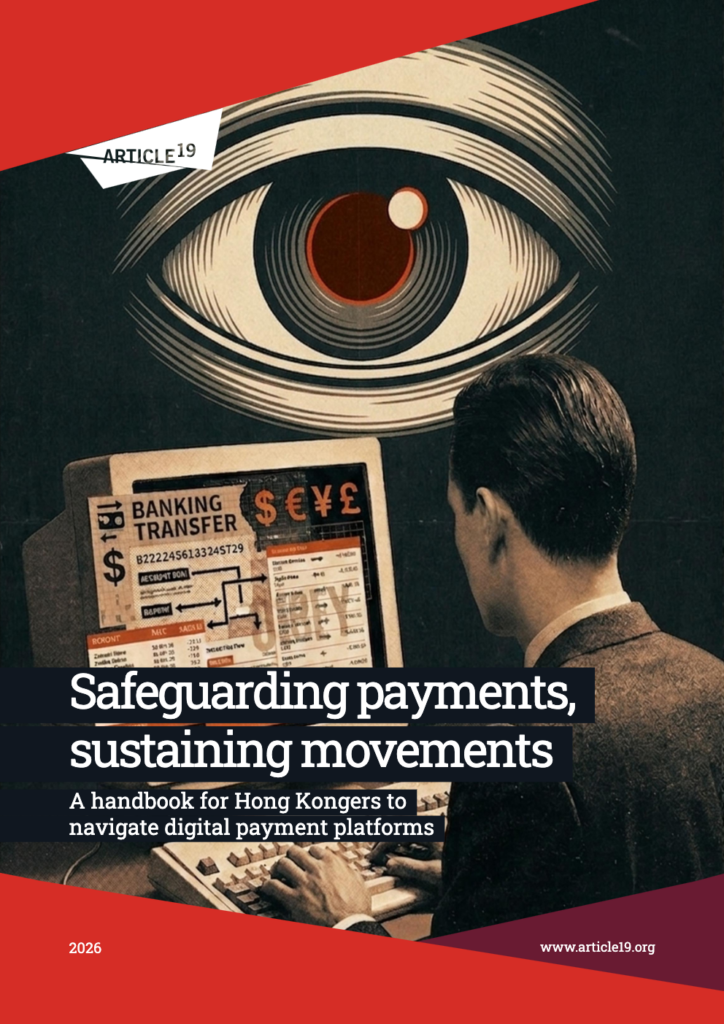
ARTICLE 19 has published a handbook for people in Hong Kong on using digital payment platforms safely.
The handbook is built around seven practical strategies. They include limiting data disclosure to what the law requires, keeping different financial activities separate, understanding how transactions and money flows work, and keeping account and transaction patterns consistent. It also advises people to know their financial service providers and their legal rights, and to prepare for how to respond under pressure. The appendices profile the relevant providers and platforms and set out what data each one collects. The handbook also covers international human rights law and the financial resilience of civil society.
The publication comes as financial services have become a pressure point for civil society in Hong Kong. PayPal Hong Kong reportedly suspended services for the pro-democracy League of Social Democrats, citing “excessive risks.” The guide aims to help activists, groups and donors reduce their exposure to data disclosure, account restrictions and unwarranted scrutiny, so they can keep raising and using funds safely. The research was supported by the Interledger Foundation, with research assistance from the UC Irvine School of Law International Justice Clinic and the IE University Law School Legal Clinic.
Read the handbook here.
Hong Kong: Decades-Old Independent Bookstore to Close After Exclusion from Book Fair
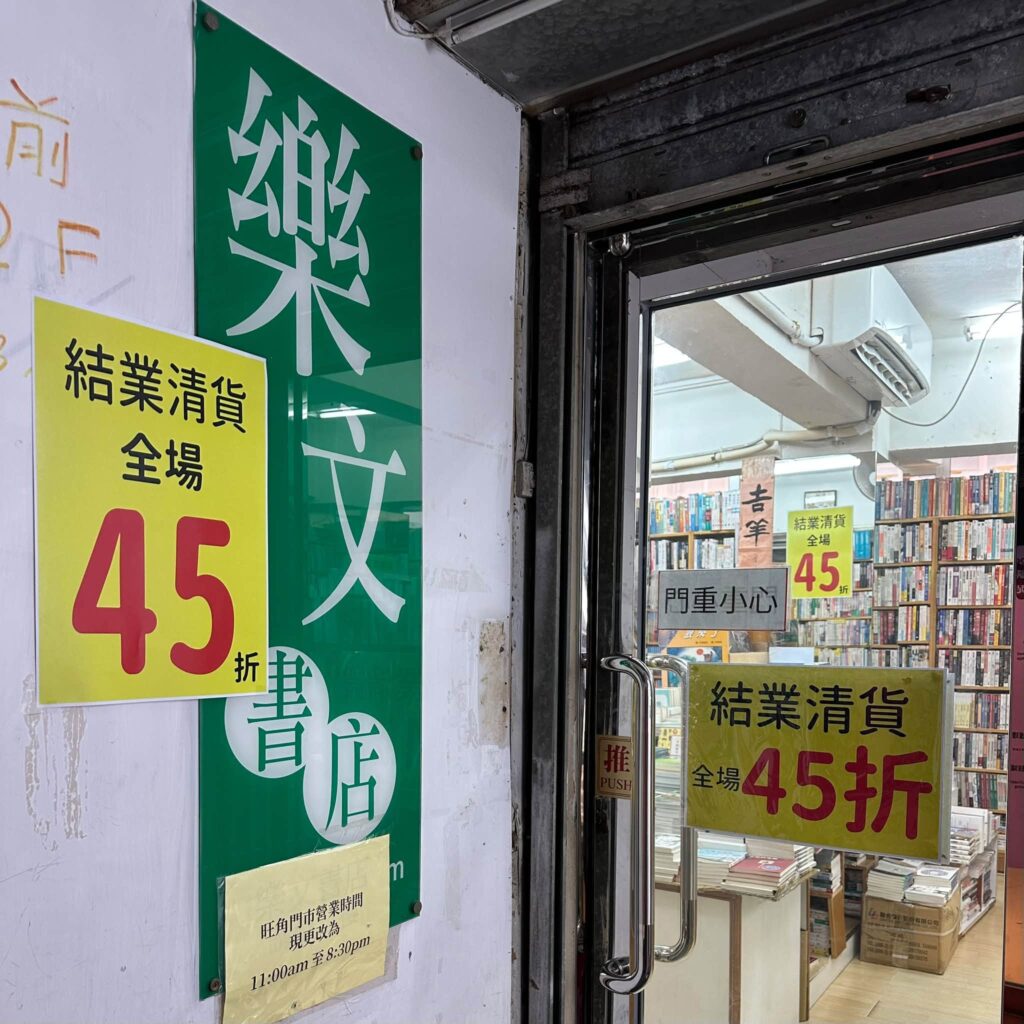
Luck Win Bookstore (樂文書店), one of Hong Kong’s oldest independent bookstores, has announced that its Mong Kok branch will close by 31 December 2026, ending 48 years of operation. A staff member at Luck Win’s Causeway Bay branch said that branch remains open and that no decision has been made to close it.
The announcement follows Luck Win’s exclusion from the annual Hong Kong Book Fair in July, along with fellow independent bookseller Elmbook (榆林書店), which has also announced plans to close its Mong Kok store.
Several other independent bookstores have faced closures, inspections and national security-related police action this year. Earlier this year, Chinese state-controlled media in Hong Kong accused Luck Win and Elmbook of selling books promoting “soft resistance.”
Although Luck Win has not disclosed the reason behind the closure, its exclusion from the Book Fair and the broader wave of closures raise concerns about shrinking space for independent cultural expression. The trend risks reducing public access to diverse viewpoints, encouraging self-censorship among booksellers and publishers, and further weakening Hong Kong’s longstanding role as a hub for relatively unrestricted Chinese-language publishing and intellectual exchange.
China: Hello Kitty Caught in Beijing-Tokyo Tensions as Sanrio Scraps TV Collaboration

Japanese entertainment giant Sanrio, the company behind Hello Kitty, has apologised and cancelled its merchandise collaboration with the spy drama Vivant following a backlash in China. The series portrays fictional Chinese intelligence agents torturing Japanese operatives, which drew accusations of anti-China sentiment from Chinese state media and social media users. The collaboration featured Hello Kitty and other Sanrio characters dressed as figures from the drama. Sanrio withdrew from it, saying it conflicted with the company’s corporate values of harmony and friendship.
The dispute comes amid heightened diplomatic tensions between Beijing and Tokyo, particularly over Taiwan. China is also a significant growth market for Sanrio, which leaves the company especially vulnerable to reputational and commercial pressure.
The Sanrio controversy and the recent backlash against French football star Kylian Mbappé over his remarks about Mao Zedong show how quickly perceived political offences can trigger nationalist anger, reputational damage and commercial consequences. Both cases underscore China’s ability to exert influence beyond traditional trade and diplomacy.
For multinational businesses, these episodes reinforce the importance of geopolitical risk assessment, cultural sensitivity and closer scrutiny of commercial partnerships and brand ambassadors. They also expose the increasingly difficult balance between keeping access to China’s lucrative consumer market and preserving freedom of expression and corporate autonomy. That pressure could encourage greater self-censorship and limit cross-border cultural and commercial engagement.