Welcome to Resilience Innovation Lab (RIL). In this newsletter, we will share updates on situation in Hong Kong and Chinese for journalists and event by RIL and partnters.
(Scroll down for Traditional Chinese version)
Hong Kong: Independent Journalist Arrested over Protest-Anniversary Coverage

Hong Kong police arrested Tang Ho-wing, founder of the independent outlet Boom News, on 30 September 2026 under the Safeguarding National Security Ordinance on suspicion of acting with “seditious intention.” The arrest followed Boom News’s 31 August coverage of a small gathering marking the seventh anniversary of the 2019 police crackdown on extradition-bill protests.
Authorities said the gathering outside a subway station involved banned slogans and alleged disinformation meant to incite hatred against the government and police.
The Hong Kong Journalists Association warned that if reporters can be arrested for covering events on-site, every frontline journalist faces the same risk.
Mainland China: Sophia Huang Xueqin’s Sentence Ends
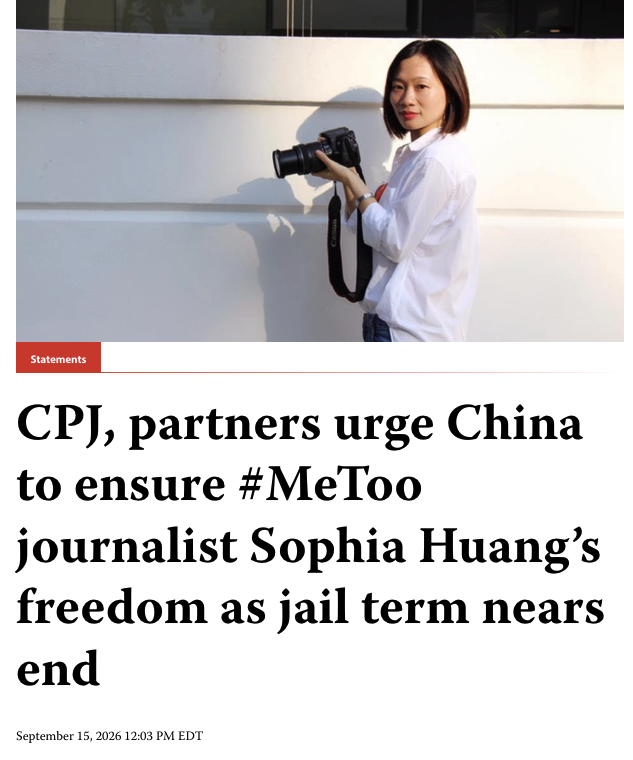
Huang, born in 1988, began her career at the state-run China News Service before moving into independent reporting. In 2018 she helped bring sexual harassment in Chinese media workplaces into public view. Her reporting on human rights and sexual abuse helped spark China’s #MeToo movement. In September 2021 she was arrested and held incommunicado for more than five months and reportedly ill-treated. In 2024 a court sentenced her to five years, saying she had incited dissatisfaction with state power under the pretext of discussing social issues. She also received a four-year “supplemental sentence” of deprivation of political rights, which rights groups say is routinely used to restrict people’s ability to speak, publish and organise long after their prison terms end.
The #MeToo journalist was due for release on 18 September after serving a five-year sentence for “inciting subversion of state power.” CPJ and 60 other organisations urged Beijing to free her without restrictions and let her return to reporting without surveillance or retaliation.
Global Gathering 2026 @Portugal
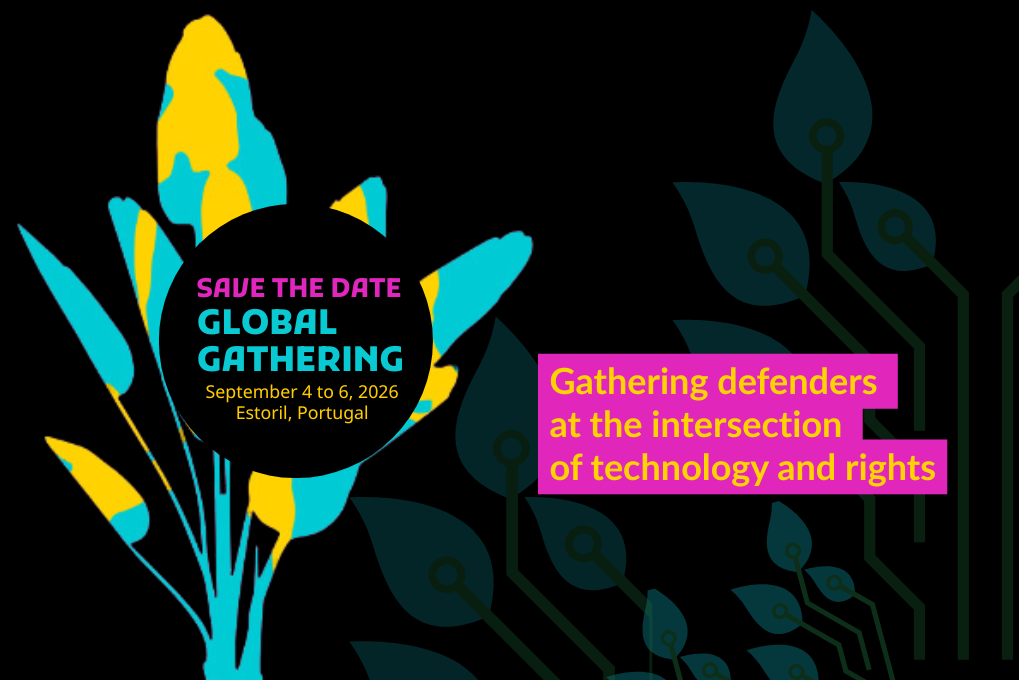
Two years in a row, RIL attended the Global Gathering (GG) in Portugal again in September 2026. The gathering brings together groups throughout the world working on the most urgent technology-related challenges affecting human rights, social justice, civil society, and journalism at the local, regional and global levels.
RIL hosted two circle discussion sessions titled “We See, We Archive, We Remember: Preserving Digital Evidence Against Erasure” and “Authoritarian Innovation: AI Safety, Surveillance, and the Politics of Control.” During the sessions, We presented our report on how China is building control into generative AI systems and guides on information security and community archiving.
Participants showed strong interest in tools for archiving social media content and raised practical concerns about platform changes, link loss, long-term storage, and the sustainability of third-party tools. Another valuable conversation explored what China’s advances in AI mean for global technology and the information environment, and how liberal democracies might respond.
We thank all attendees who shared their feedback and recommendations for us to improve our work, and who expressed interests in future collaboration.
Partner’s Event: Ways of Remembering – Hong Kong Social Movement Exhibition@Taiwan
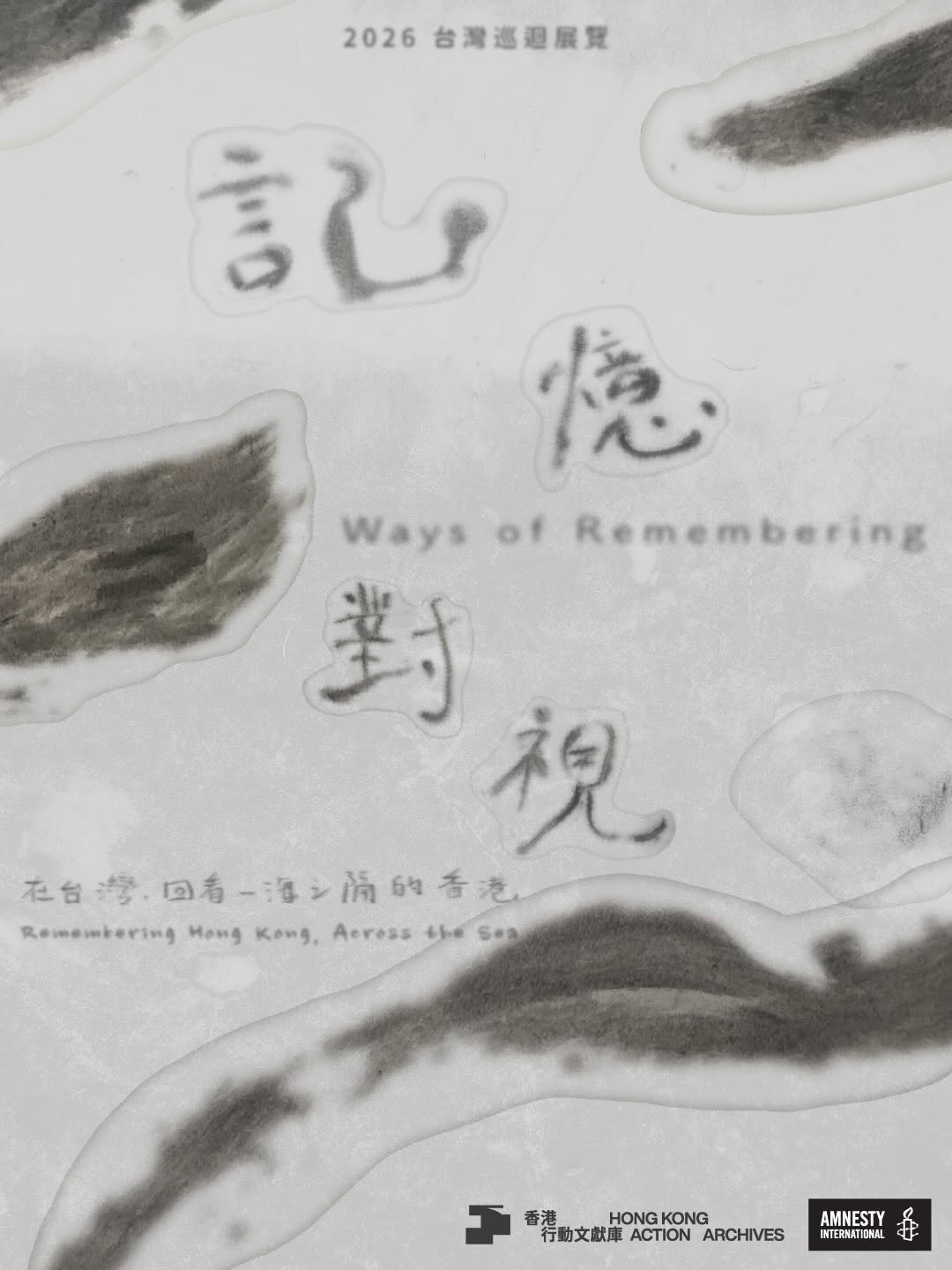
Last year, the Hong Kong Action Archives staged the exhibition Ways of Remembering in London, looking back at Hong Kong’s social movements from the 1980s to the present through the eyes of the people who took part in them. At a time when history is being rewritten and memory erased, the exhibition began with scattered archives, artefacts and personal recollections to recover what once happened, and invited everyone to help write our own Hong Kong story.
From September to December this year, Amnesty International and the Hong Kong Action Archives are bringing the exhibition to Taiwan, touring Tainan, Kaohsiung and Taipei. Through artefacts, archives, interactive installations, oral histories and a series of events, it opens a new round of conversation.
Tainan
24 September – 18 October
The Spring (河樂廣場)
Kaohsiung
10 October – 3 November
TaKaoBooks (三餘書店)
Taipei
27 November – 7 December
NOW space (鬧空間)
Useful Resources
Judicial Records in Hong Kong * has made every effort to collect court decisions related to the Anti-Extradition Bill Movement for educational and research purposes. These records are still accessible on the website of Hong Kong’s judiciary, but their continued availability to the public in the future remains uncertain. All judicial records collected and displayed here are secured and maintained using blockchain technology, through which they are decentralized and immutable, ensuring transparency, tamper-resistance, and trust in the integrity of the data. Our goal is to utilize blockchain as a form of censorship resistance to preserve invaluable public records.
If there are any omissions in this database, please feel free to notify RIL’s research team: enquiries@digitalarchivingproject.com.
*To protect your identity and personal information, you are advised to use these online resources with an encrypted device and VPN.
An Unbreakable Wall? Challenges and Opportunities of Defending Freedom of Information in China is RIL’s first research report on information environment in China. This report provides a comprehensive account of China’s information environment under the rule of the CCP. Drawing on evidence-based insights from multiple perspectives, the report seeks to inform a broad range of stakeholders—from policymakers and international businesses to civil society organisations and academic institutions—and encourages collaborative efforts to address the challenges posed by China’s information landscape and its impact on global information networks. The full report is now available on our website.
Safeguarding Freedom of Information in Hong Kong: Challenges, Opportunities and Remedies is RIL’s second research report, focuding on information freedom in Hong Kong. The report systematically outlines how Hong Kong’s information access environment has been significantly constrained since the implementation of the Hong Kong National Security Law (HKNSL) in 2020 and the Safeguarding National Security Ordinance (SNSO) in 2024. These measures have severely curtailed press freedom and undermined the ability of civil society to hold the government accountable. They have encouraged the withholding of publicly available data and represent a departure from international human rights standards. Access to and dissemination of information is increasingly criminalised, resulting in diminished government transparency, suppression of the media, and reduced accessibility to data for businesses. The repercussions are being felt by journalists, the business sector, researchers, and international organisations alike. The report is published bilingually on our website.
Authoritarian Innovation: How China Is Building Control into Generative AI Systems is RIL’s third report. Co-authored with Strategic China Policy Group (SCPG), the report draws on official sources and technical standards to examine how Beijing is embedding information control into large language models through its content security framework, standards, and model governance.
Keeping Calm Amid Uncertainty: An Information Security Resilience Guide for Civil Society (Tradtional Chinese only) is a practical manual developed by RIL for Hong Kong civil society, diaspora communities, journalists, advocates, students, and community organisers seeking to strengthen their digital safety. The guide offers accessible advice on common information security risks, secure communications, device and account protection, AI-related privacy concerns, and digital preparation for travel or cross-border activities. Framing information security as both personal protection and collective care, the manual helps individuals and organisations reduce risks, safeguard trusted networks, and build stronger civic resilience in an uncertain political, legal, and technological environment.
Working with Difficult Records Series is a webinar series organised by The National Archives UK. This series explores how archives can engage with challenging and sensitive records through people-centred and trauma-informed approaches. Bringing together scholars, practitioners, and sector experts, the sessions share practical case studies, reflections, and strategies that emphasise care, empathy, and community in archival work. Participants will gain insight into managing distressing material, supporting wellbeing, and applying trauma-informed practices to strengthen both professional practice and funding opportunities, while also building a collaborative community of practice. Topics include working with traumatic histories, criminal justice, medical and mental health records, social justice collections, and beneficiary-focused archives.

Who we are?
Resilience Innovation Lab (RIL) was founded by Asian veteran researchers and human rights defenders in 2023. RIL is a virtual platform promoting innovation, experimentation, and the exchange of research and educational initiatives that aim to develop and strengthen the democratic and digital resilience of organisations and individuals working in repressive environments.
RIL envisions a synergy of democracy, technology and civil society resilience today, especially when authoritarianism emerges as a common threat to liberal democracies and open societies. Building the capacities of citizens and civil groups to respond to such a new environment with creative and innovative instruments is of paramount importance for their sustainable development.
Our work focuses on researching Web3 technology, digital preservation of collective memory and history in conflict and post-conflict areas, and resilience of rule of law institutions and cultures in non-democratic regimes.
Enquiry: info@resilienceinnovationlab.org