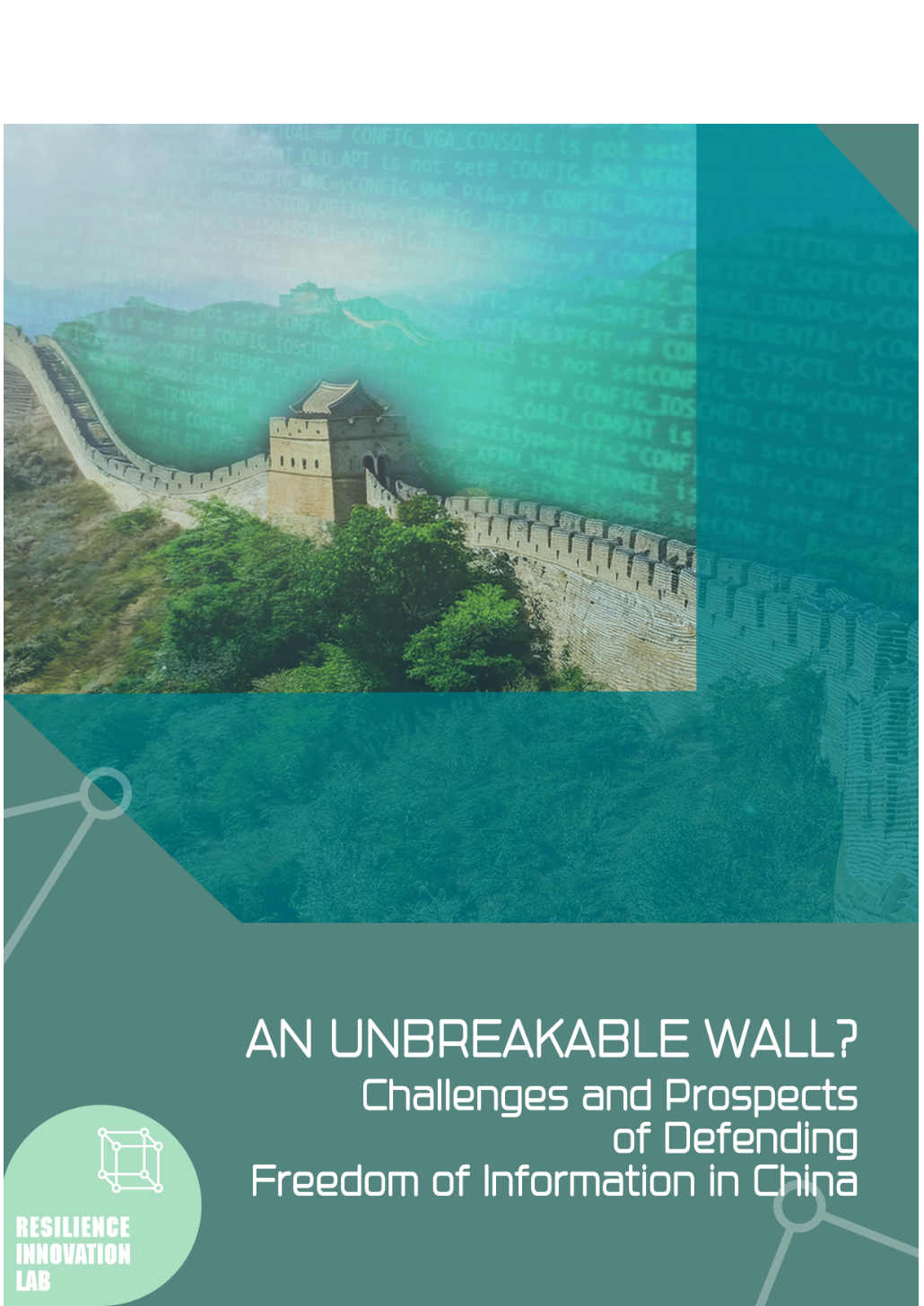
坚不可摧的高墙?在中国捍卫信息自由的挑战与机会(只有英文版本)
过去十年间,随着国家对数字通讯的掌控日益加剧,中国的信息环境已显着恶化。审查与监控的强化与多项重大事件密切相关,包括 2019 年的香港抗议活动、2020 年的新冠疫情,以及 2022 年的白纸运动。中国共产党(中共)出于对外来意识形态影响和国内政权安全的忧虑,系统性地强化了对网络空间的控制。
企业,特别是跨国公司,面对中国日益收紧的数字环境,风险亦随之上升。尽职调查作业受到严重限制,机构经历突袭检查、出境禁令、非正式政府警告,以及无法取得关键企业信息数据库等问题。公民社会组织、新闻工作者与学者也面临类似限制,包括日常监控、内容审查及重大营运中断。学术自由、新闻独立与公民行动常遭模糊法律界线、更严格的监控手段以及政府直接威胁所挑战。
本报告全面记录中共统治下中国的信息环境,特别着重于习近平总书记上台以来的发展。报告深入分析国家主导、系统性的信息操控如何影响社会各个层面——包括信息供应链、公共信息的可及性,以及企业(尤其是尽职调查产业)、公民社会组织、媒体与学术界在中国境内外的运作条件。透过多元视角的实证分析,本报告旨在为包括政策制定者、国际企业、公民社会组织与学术机构在内的利益相关方提供参考,并促进跨界合作,应对中国信息环境及其对全球信息网络带来的挑战。
韧性创新实验室诚挚感谢数字匿名贡献者与受访者,他们基于安全与风险考虑选择隐去身分。他们的勇气与深刻见解大大丰富了本报告的内容与真实性。我们衷心期盼在不久的将来,贡献者与研究者无需再隐姓埋名,而能够公开参与,为中国迈向自由、透明与开放的社会共同努力。
Table of Contents
TABLE OF CONTENTS
ABOUT US
EXECUTIVE SUMMARY
- INTRODUCTION
- INFORMATION ENVIRONMENT IN THE PEOPLE’S REPUBLIC OF CHINA: AN OVERVIEW
2.1 XI’S EMPHASIS ON PRC’S CYBER SOVEREIGNTY
2.2 REINFORCING EXISTING REGULATIONS
2.3 CREATION OF A NEW LEGAL FRAMEWORK FOR CYBER GOVERNANCE - CCP’S CURRENT APPROACHES TO CHINA’S INFORMATION ENVIRONMENT
3.1 WHY HAS THE INFORMATION ENVIRONMENT BEEN TIGHTENED?
3.2 WHAT ARE THE APPROACHES? - IMPACTS ON THE PRIVATE SECTOR
4.1 RAPID GROWTH OF CHINA’S BUSINESS INTELLIGENCE AND DUE DILIGENCE INDUSTRY BEFORE THE STATE CRACKDOWN
4.2 STATE CRACKDOWN ON DUE DILIGENCE
4.3 STATE CRACKDOWN ON DUE DILIGENCE WORK ABOUT XINJIANG
4.4 EXIT BANS ON EXECUTIVES OF DUE DILIGENCE CONSULTANCIES
4.5 INFORMAL WARNINGS
4.6 CHILLING EFFECTS ON THE DUE DILIGENCE SECTOR
4.7 OFFICIAL FIREWALLS OBSTRUCTING DUE DILIGENCE - IMPACTS ON CIVIL SOCIETY STAKEHOLDERS
5.1 IMPACT ON CIVIL SOCIETY
5.2 IMPACT ON JOURNALISTS
5.3 ON ACADEMICS - UPCOMING CHALLENGES FOR INFORMATION FREEDOM IN CHINA
6.1 EXTERNAL FACTORS: GEOPOLITICAL UNCERTAINTY AND TRANSNATIONAL SURVEILLANCE
6.2 INTERNAL FACTORS: TIGHTENING CONTROL AMID ECONOMIC INSTABILITY
6.3 TECHNOLOGICAL REINFORCEMENT OF CONTROL THROUGH AI AND “SMART GOVERNANCE”
6.4 BREAKDOWN OF CONVENTIONAL MITIGATIONS: HONG KONG AND BUSINESS AUTONOMY - CONCLUSION AND RECOMMENDATIONS
7.1 STATE ACTORS
7.2 MULTILATERAL INSTITUTIONS
7.3 INTERNATIONAL BUSINESS SECTOR AND MULTINATIONAL CORPORATIONS (MNCS)
7.4 GLOBAL CIVIL SOCIETY AND ACADEMIC INSTITUTIONS
Foreword / Executive Summary
Executive Summary
Over the past decade, China’s information environment has deteriorated significantly as state control over digital communication has intensified. Major expansions of censorship and surveillance have coincided with significant political and social events, including the 2019 Hong Kong protests, the COVID-19 pandemic in 2020, and the White Paper Movement in 2022.
The Chinese Communist Party (CCP) has systematically tightened its control over cyberspace, driven by concerns about foreign ideological influence and domestic regime security. Its approach combines extensive digital surveillance, narrative control through media and information management, and reinforced digital border controls, including the Great Firewall. Recent legislative developments, including amendments to national security laws and new cybersecurity regulations, have further restricted information flows, affecting businesses, journalists, academics, and civil society organisations.
Businesses, particularly multinational corporations, face heightened operational and compliance risks in China’s increasingly restrictive information environment. Due diligence activities have been significantly constrained, with firms experiencing raids, exit bans, informal government warnings, and restricted access to critical corporate and commercial information databases.
Civil society organisations, journalists, and academics face similar constraints, including routine surveillance, censorship, and substantial disruption to their work. Academic freedom, journalistic independence, and civic activism are increasingly challenged by vague legal boundaries, intensified monitoring, and direct pressure from authorities.
Looking ahead, the outlook for information freedom in China remains concerning. Escalating geopolitical tensions, economic uncertainty, and the CCP’s expanding use of artificial intelligence for surveillance and governance are likely to deepen existing forms of information control. The erosion of conventional mitigation mechanisms, exemplified by the decline of Hong Kong’s autonomy, further compounds these challenges.
Policy Recommendations
- National governments should incorporate digital rights provisions into diplomatic engagements and trade agreements, supported by regular assessments of China’s digital governance and information-control policies.
- Multilateral institutions, including the World Bank, International Monetary Fund, and World Trade Organization, should promote regulatory standards that emphasise open access to information and strengthen mechanisms for monitoring digital repression and restrictions on information flows.
- Businesses should conduct continuous risk assessments, supported by chambers of commerce and industry associations, and adopt a Business and Human Rights Charter aligned with international human rights standards.
- Civil society organisations, media, and academic institutions should proactively preserve information at risk of censorship or removal, strengthen international collaboration, and develop strategies to safeguard historical and contemporary records for future generations.