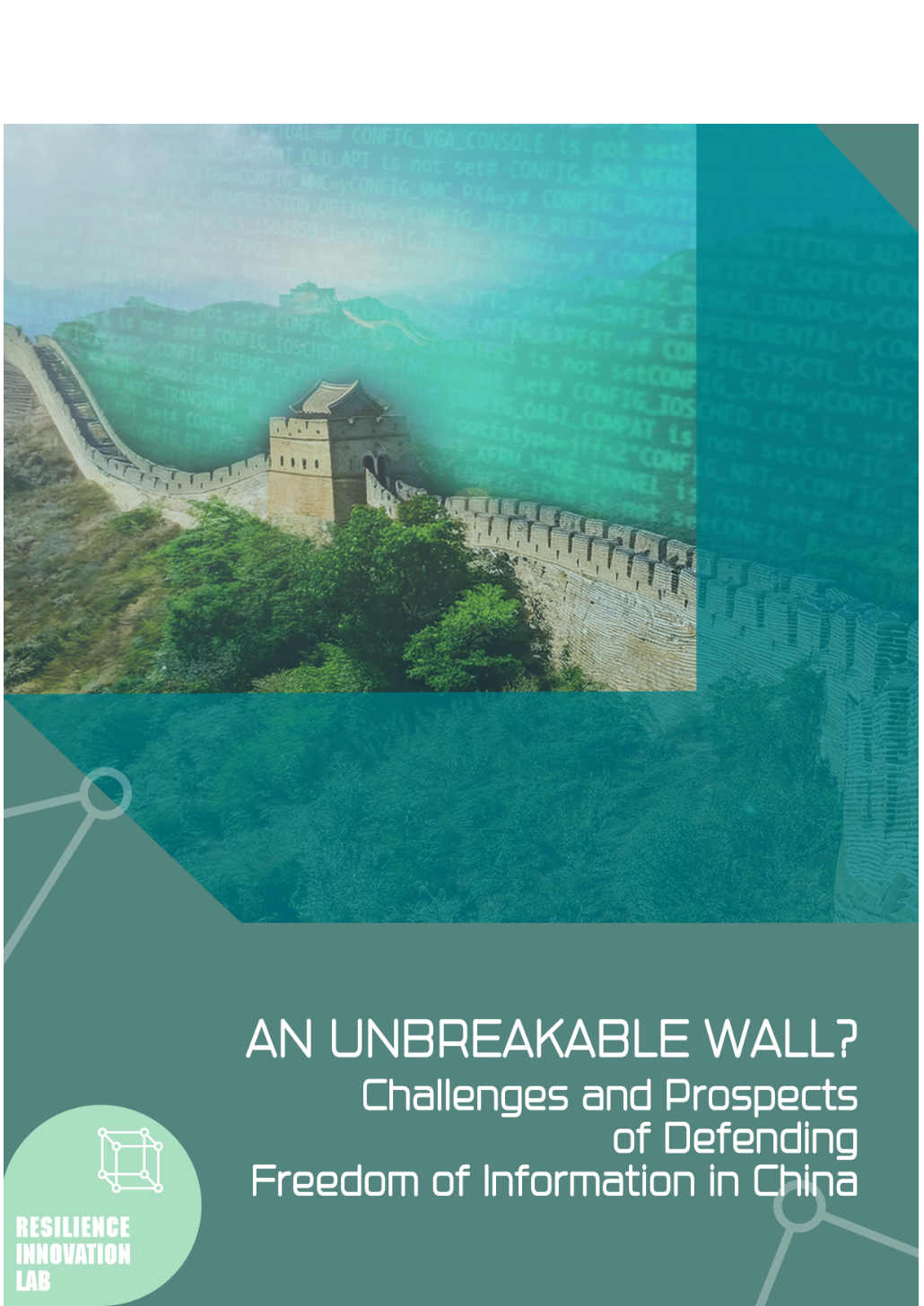
堅不可摧的高牆?在中國捍衛資訊自由的挑戰與機會
過去十年間,隨著國家對數位通訊的掌控日益加劇,中國的資訊環境已顯著惡化。審查與監控的強化與多項重大事件密切相關,包括 2019 年的香港抗議活動、2020 年的新冠疫情,以及 2022 年的白紙運動。中國共產黨(中共)出於對外來意識形態影響和國內政權安全的憂慮,系統性地強化了對網絡空間的控制。
企業,特別是跨國公司,面對中國日益收緊的數位環境,風險亦隨之上升。盡職調查作業受到嚴重限制,機構經歷突襲檢查、出境禁令、非正式政府警告,以及無法取得關鍵企業資訊資料庫等問題。公民社會組織、新聞工作者與學者也面臨類似限制,包括日常監控、內容審查及重大營運中斷。學術自由、新聞獨立與公民行動常遭模糊法律界線、更嚴格的監控手段以及政府直接威脅所挑戰。
本報告全面記錄中共統治下中國的資訊環境,特別著重於習近平總書記上台以來的發展。報告深入分析國家主導、系統性的信息操控如何影響社會各個層面——包括資訊供應鏈、公共資訊的可及性,以及企業(尤其是盡職調查產業)、公民社會組織、媒體與學術界在中國境內外的運作條件。透過多元視角的實證分析,本報告旨在為包括政策制定者、國際企業、公民社會組織與學術機構在內的利益相關方提供參考,並促進跨界合作,應對中國資訊環境及其對全球資訊網絡帶來的挑戰。
韌性創新實驗室誠摯感謝數位匿名貢獻者與受訪者,他們基於安全與風險考量選擇隱去身分。他們的勇氣與深刻見解大大豐富了本報告的內容與真實性。我們衷心期盼在不久的將來,貢獻者與研究者無需再隱姓埋名,而能夠公開參與,為中國邁向自由、透明與開放的社會共同努力。
Table of Contents
TABLE OF CONTENTS
ABOUT US
EXECUTIVE SUMMARY
- INTRODUCTION
- INFORMATION ENVIRONMENT IN THE PEOPLE’S REPUBLIC OF CHINA: AN OVERVIEW
2.1 XI’S EMPHASIS ON PRC’S CYBER SOVEREIGNTY
2.2 REINFORCING EXISTING REGULATIONS
2.3 CREATION OF A NEW LEGAL FRAMEWORK FOR CYBER GOVERNANCE - CCP’S CURRENT APPROACHES TO CHINA’S INFORMATION ENVIRONMENT
3.1 WHY HAS THE INFORMATION ENVIRONMENT BEEN TIGHTENED?
3.2 WHAT ARE THE APPROACHES? - IMPACTS ON THE PRIVATE SECTOR
4.1 RAPID GROWTH OF CHINA’S BUSINESS INTELLIGENCE AND DUE DILIGENCE INDUSTRY BEFORE THE STATE CRACKDOWN
4.2 STATE CRACKDOWN ON DUE DILIGENCE
4.3 STATE CRACKDOWN ON DUE DILIGENCE WORK ABOUT XINJIANG
4.4 EXIT BANS ON EXECUTIVES OF DUE DILIGENCE CONSULTANCIES
4.5 INFORMAL WARNINGS
4.6 CHILLING EFFECTS ON THE DUE DILIGENCE SECTOR
4.7 OFFICIAL FIREWALLS OBSTRUCTING DUE DILIGENCE - IMPACTS ON CIVIL SOCIETY STAKEHOLDERS
5.1 IMPACT ON CIVIL SOCIETY
5.2 IMPACT ON JOURNALISTS
5.3 ON ACADEMICS - UPCOMING CHALLENGES FOR INFORMATION FREEDOM IN CHINA
6.1 EXTERNAL FACTORS: GEOPOLITICAL UNCERTAINTY AND TRANSNATIONAL SURVEILLANCE
6.2 INTERNAL FACTORS: TIGHTENING CONTROL AMID ECONOMIC INSTABILITY
6.3 TECHNOLOGICAL REINFORCEMENT OF CONTROL THROUGH AI AND “SMART GOVERNANCE”
6.4 BREAKDOWN OF CONVENTIONAL MITIGATIONS: HONG KONG AND BUSINESS AUTONOMY - CONCLUSION AND RECOMMENDATIONS
7.1 STATE ACTORS
7.2 MULTILATERAL INSTITUTIONS
7.3 INTERNATIONAL BUSINESS SECTOR AND MULTINATIONAL CORPORATIONS (MNCS)
7.4 GLOBAL CIVIL SOCIETY AND ACADEMIC INSTITUTIONS
Foreword / Executive Summary
Executive Summary
Over the past decade, China’s information environment has deteriorated significantly as state control over digital communication has intensified. Major expansions of censorship and surveillance have coincided with significant political and social events, including the 2019 Hong Kong protests, the COVID-19 pandemic in 2020, and the White Paper Movement in 2022.
The Chinese Communist Party (CCP) has systematically tightened its control over cyberspace, driven by concerns about foreign ideological influence and domestic regime security. Its approach combines extensive digital surveillance, narrative control through media and information management, and reinforced digital border controls, including the Great Firewall. Recent legislative developments, including amendments to national security laws and new cybersecurity regulations, have further restricted information flows, affecting businesses, journalists, academics, and civil society organisations.
Businesses, particularly multinational corporations, face heightened operational and compliance risks in China’s increasingly restrictive information environment. Due diligence activities have been significantly constrained, with firms experiencing raids, exit bans, informal government warnings, and restricted access to critical corporate and commercial information databases.
Civil society organisations, journalists, and academics face similar constraints, including routine surveillance, censorship, and substantial disruption to their work. Academic freedom, journalistic independence, and civic activism are increasingly challenged by vague legal boundaries, intensified monitoring, and direct pressure from authorities.
Looking ahead, the outlook for information freedom in China remains concerning. Escalating geopolitical tensions, economic uncertainty, and the CCP’s expanding use of artificial intelligence for surveillance and governance are likely to deepen existing forms of information control. The erosion of conventional mitigation mechanisms, exemplified by the decline of Hong Kong’s autonomy, further compounds these challenges.
Policy Recommendations
- National governments should incorporate digital rights provisions into diplomatic engagements and trade agreements, supported by regular assessments of China’s digital governance and information-control policies.
- Multilateral institutions, including the World Bank, International Monetary Fund, and World Trade Organization, should promote regulatory standards that emphasise open access to information and strengthen mechanisms for monitoring digital repression and restrictions on information flows.
- Businesses should conduct continuous risk assessments, supported by chambers of commerce and industry associations, and adopt a Business and Human Rights Charter aligned with international human rights standards.
- Civil society organisations, media, and academic institutions should proactively preserve information at risk of censorship or removal, strengthen international collaboration, and develop strategies to safeguard historical and contemporary records for future generations.