Blog

  • RIL Newsletter #2026-10

    RIL Newsletter #2026-10

    Welcome to Resilience Innovation Lab (RIL). In this newsletter, we will share updates on latest publications by RIL and other civil society organisations, closure of independent bookstore in Hong Kong, and China’s backlash against Japanese corporation sparked by new Japanese TV drama.


    Publication: RIL Report on UN Mechanisms and Hong Kong Now Available in Chinese

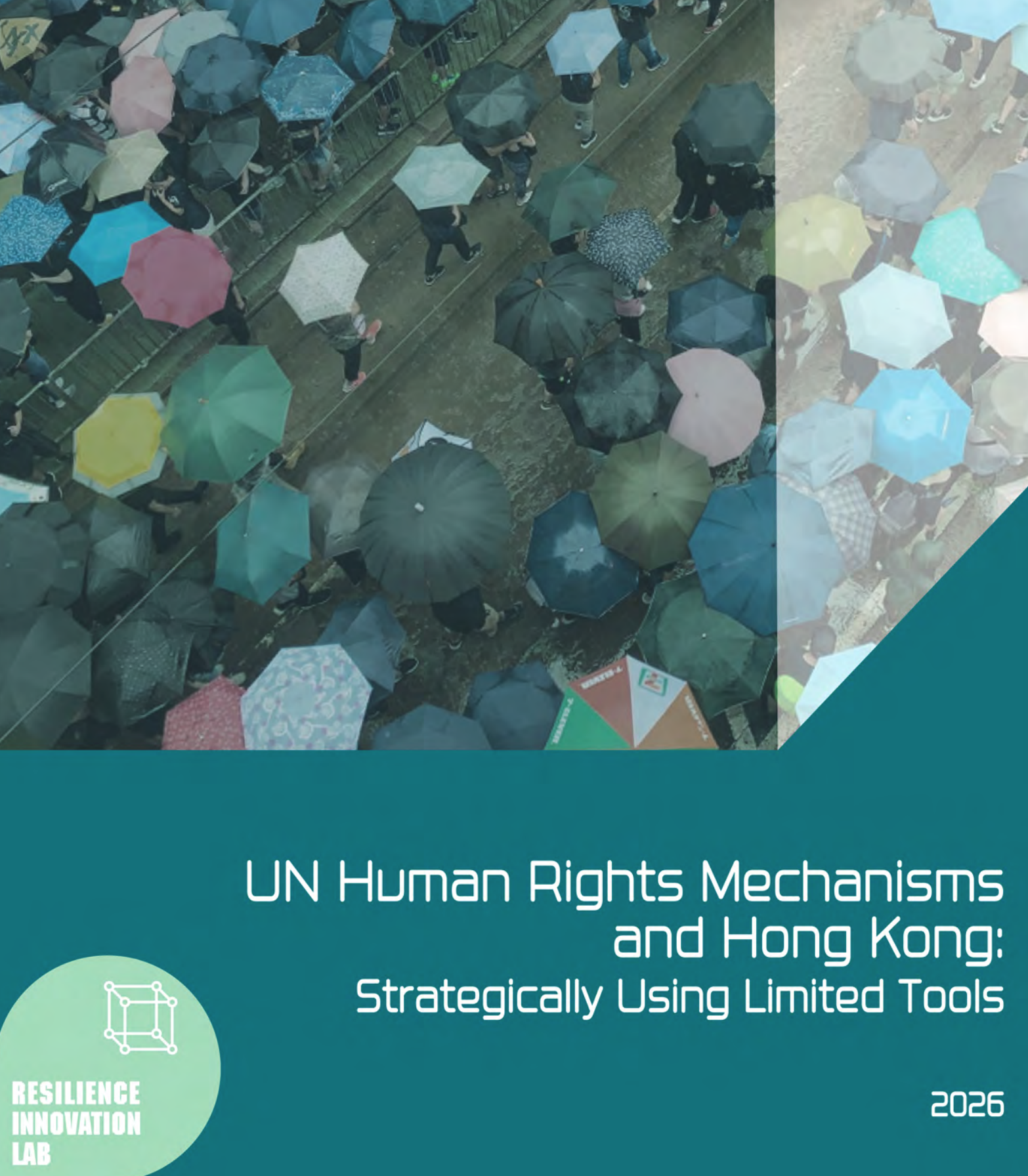
    RIL has published the Chinese version of UN Human Rights Mechanisms and Hong Kong: Strategically Using Limited Tools, originally published in English in August.

    The report maps and analyses how UN treaty bodies, Special Procedures, the Human Rights Council and the Office of the High Commissioner for Human Rights have responded to developments in Hong Kong since the introduction of the National Security Law. It also considers how UN recommendations and international human rights discourse can continue to support human rights education, advocacy and rule-of-law resilience, despite the limited enforcement powers of international mechanisms.

    Read the Chinese version here.

    Read the English version here.

    Publication: ARTICLE 19 Handbook Offers Strategies for Safer Digital Payments
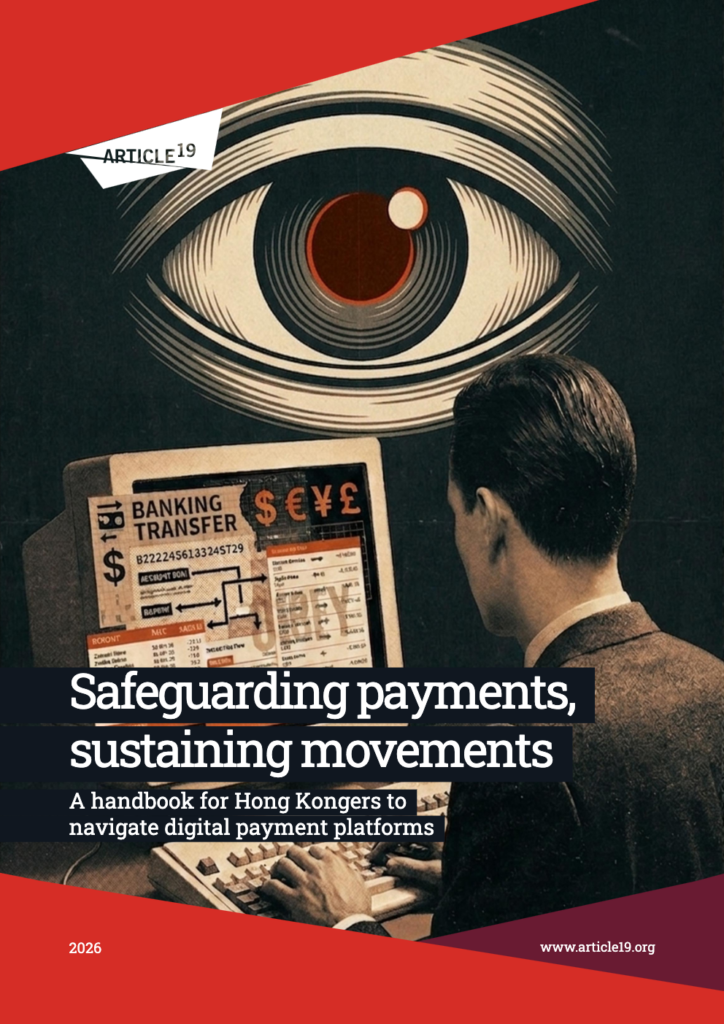
    ARTICLE 19 has published a handbook for people in Hong Kong on using digital payment platforms safely.

    The handbook is built around seven practical strategies. They include limiting data disclosure to what the law requires, keeping different financial activities separate, understanding how transactions and money flows work, and keeping account and transaction patterns consistent. It also advises people to know their financial service providers and their legal rights, and to prepare for how to respond under pressure. The appendices profile the relevant providers and platforms and set out what data each one collects. The handbook also covers international human rights law and the financial resilience of civil society.

    The publication comes as financial services have become a pressure point for civil society in Hong Kong. PayPal Hong Kong reportedly suspended services for the pro-democracy League of Social Democrats, citing “excessive risks.” The guide aims to help activists, groups and donors reduce their exposure to data disclosure, account restrictions and unwarranted scrutiny, so they can keep raising and using funds safely. The research was supported by the Interledger Foundation, with research assistance from the UC Irvine School of Law International Justice Clinic and the IE University Law School Legal Clinic.

    Read the handbook here.

    Hong Kong: Decades-Old Independent Bookstore to Close After Exclusion from Book Fair

    Image Credit: 旺角樂文書店 facebook page

    Luck Win Bookstore (樂文書店), one of Hong Kong’s oldest independent bookstores, has announced that its Mong Kok branch will close by 31 December 2026, ending 48 years of operation. A staff member at Luck Win’s Causeway Bay branch said that branch remains open and that no decision has been made to close it.

    The announcement follows Luck Win’s exclusion from the annual Hong Kong Book Fair in July, along with fellow independent bookseller Elmbook (榆林書店), which has also announced plans to close its Mong Kok store.

    Several other independent bookstores have faced closures, inspections and national security-related police action this year. Earlier this year, Chinese state-controlled media in Hong Kong accused Luck Win and Elmbook of selling books promoting “soft resistance.”

    Although Luck Win has not disclosed the reason behind the closure, its exclusion from the Book Fair and the broader wave of closures raise concerns about shrinking space for independent cultural expression. The trend risks reducing public access to diverse viewpoints, encouraging self-censorship among booksellers and publishers, and further weakening Hong Kong’s longstanding role as a hub for relatively unrestricted Chinese-language publishing and intellectual exchange.

    China: Hello Kitty Caught in Beijing-Tokyo Tensions as Sanrio Scraps TV Collaboration

    Nandaro, CC BY-SA 4.0, via Wikimedia Commons

    Japanese entertainment giant Sanrio, the company behind Hello Kitty, has apologised and cancelled its merchandise collaboration with the spy drama Vivant following a backlash in China. The series portrays fictional Chinese intelligence agents torturing Japanese operatives, which drew accusations of anti-China sentiment from Chinese state media and social media users. The collaboration featured Hello Kitty and other Sanrio characters dressed as figures from the drama. Sanrio withdrew from it, saying it conflicted with the company’s corporate values of harmony and friendship.

    The dispute comes amid heightened diplomatic tensions between Beijing and Tokyo, particularly over Taiwan. China is also a significant growth market for Sanrio, which leaves the company especially vulnerable to reputational and commercial pressure.

    The Sanrio controversy and the recent backlash against French football star Kylian Mbappé over his remarks about Mao Zedong show how quickly perceived political offences can trigger nationalist anger, reputational damage and commercial consequences. Both cases underscore China’s ability to exert influence beyond traditional trade and diplomacy.

    For multinational businesses, these episodes reinforce the importance of geopolitical risk assessment, cultural sensitivity and closer scrutiny of commercial partnerships and brand ambassadors. They also expose the increasingly difficult balance between keeping access to China’s lucrative consumer market and preserving freedom of expression and corporate autonomy. That pressure could encourage greater self-censorship and limit cross-border cultural and commercial engagement.

  • RIL Newsletter #2026-09

    RIL Newsletter #2026-09

    Welcome to Resilience Innovation Lab (RIL). In this newsletter, we will share updates on situation in Hong Kong and Chinese for journalists and event by RIL and partnters.

    Hong Kong: Independent Journalist Arrested over Protest-Anniversary Coverage

    Hong Kong police arrested Tang Ho-wing, founder of the independent outlet Boom News, on 30 September 2026 under the Safeguarding National Security Ordinance on suspicion of acting with “seditious intention.” The arrest followed Boom News’s 31 August coverage of a small gathering marking the seventh anniversary of the 2019 police crackdown on extradition-bill protests.

    Authorities said the gathering outside a subway station involved banned slogans and alleged disinformation meant to incite hatred against the government and police.

    The Hong Kong Journalists Association warned that if reporters can be arrested for covering events on-site, every frontline journalist faces the same risk.

    Mainland China: Sophia Huang Xueqin’s Sentence Ends

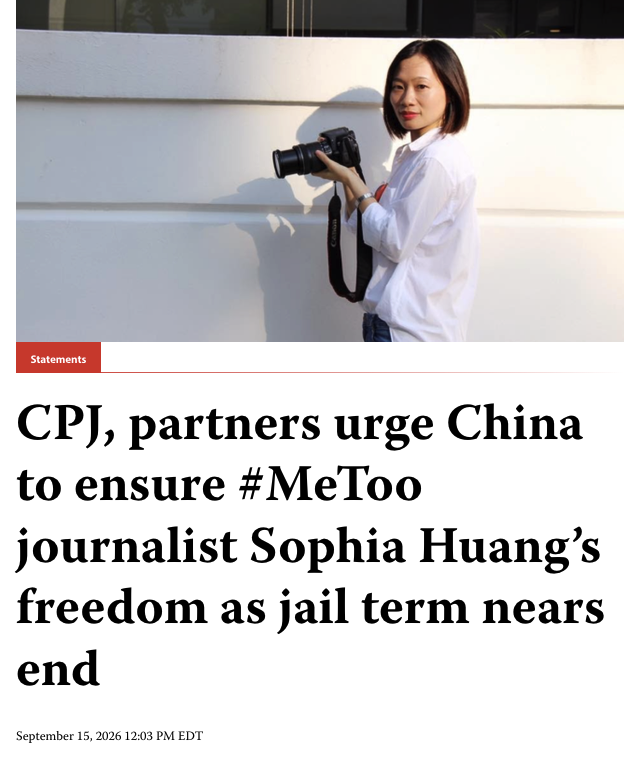
    Huang, born in 1988, began her career at the state-run China News Service before moving into independent reporting. In 2018 she helped bring sexual harassment in Chinese media workplaces into public view. Her reporting on human rights and sexual abuse helped spark China’s #MeToo movement. In September 2021 she was  arrested and held incommunicado for more than five months and reportedly ill-treated. In 2024 a court sentenced her to five years, saying she had incited dissatisfaction with state power under the pretext of discussing social issues. She also received a four-year “supplemental sentence” of deprivation of political rights, which rights groups say is routinely used to restrict people’s ability to speak, publish and organise long after their prison terms end.

    The #MeToo journalist was due for release on 18 September after serving a five-year sentence for “inciting subversion of state power.” CPJ and 60 other organisations urged Beijing to free her without restrictions and let her return to reporting without surveillance or retaliation.

    Global Gathering 2026 @Portugal

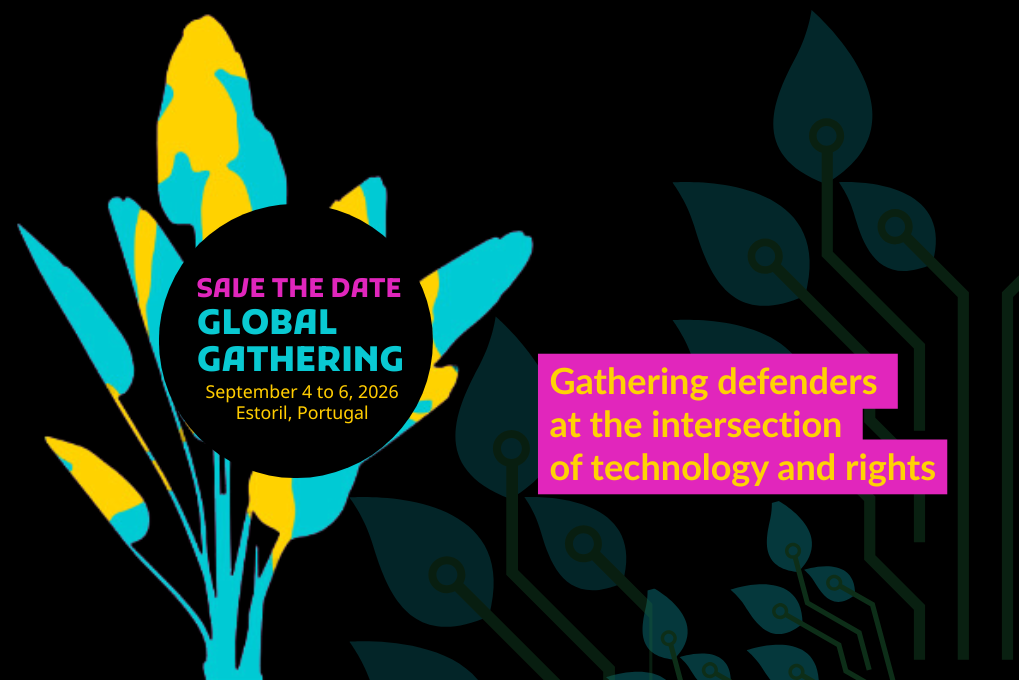
    Two years in a row, RIL attended the Global Gathering (GG) in Portugal again in September 2026. The gathering brings together groups throughout the world working on the most urgent technology-related challenges affecting human rights, social justice, civil society, and journalism at the local, regional and global levels.

    RIL hosted two circle discussion sessions titled “We See, We Archive, We Remember: Preserving Digital Evidence Against Erasure” and “Authoritarian Innovation: AI Safety, Surveillance, and the Politics of Control.” During the sessions, We presented our report on how China is building control into generative AI systems and guides on information security and community archiving.

    Participants showed strong interest in tools for archiving social media content and raised practical concerns about platform changes, link loss, long-term storage, and the sustainability of third-party tools. Another valuable conversation explored what China’s advances in AI mean for global technology and the information environment, and how liberal democracies might respond.

    We thank all attendees who shared their feedback and recommendations for us to improve our work, and who expressed interests in future collaboration.

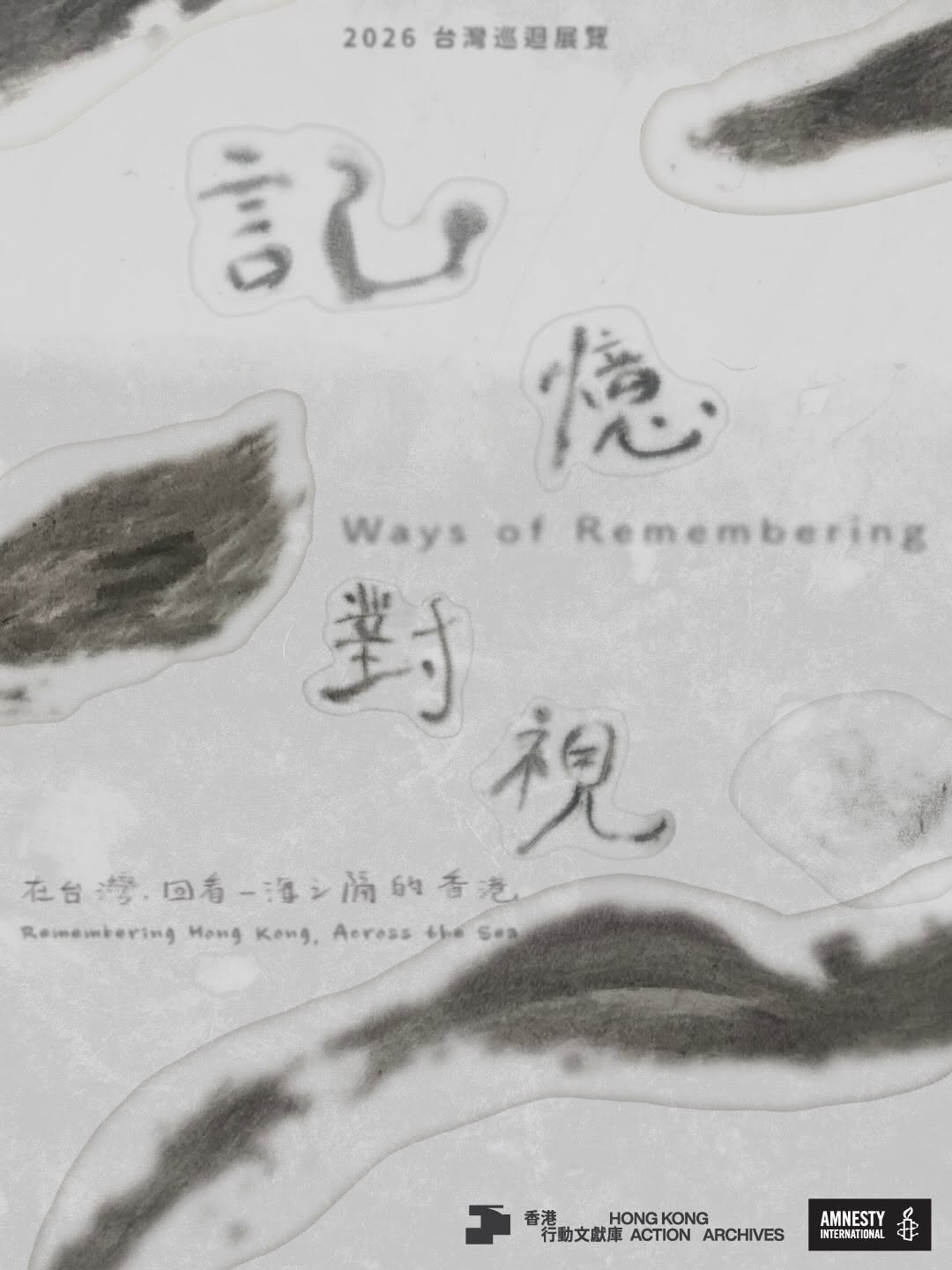
    Partner’s Event: Ways of Remembering – Hong Kong Social Movement Exhibition@Taiwan

    Last year, the Hong Kong Action Archives staged the exhibition Ways of Remembering in London, looking back at Hong Kong’s social movements from the 1980s to the present through the eyes of the people who took part in them. At a time when history is being rewritten and memory erased, the exhibition began with scattered archives, artefacts and personal recollections to recover what once happened, and invited everyone to help write our own Hong Kong story.

    From September to December this year, Amnesty International and the Hong Kong Action Archives are bringing the exhibition to Taiwan, touring Tainan, Kaohsiung and Taipei. Through artefacts, archives, interactive installations, oral histories and a series of events, it opens a new round of conversation.

    Tainan

    24 September – 18 October

    The Spring (河樂廣場)

    Kaohsiung

    10 October – 3 November

    TaKaoBooks (三餘書店)

    Taipei

    27 November – 7 December

    NOW space (鬧空間)

    Useful Resources

    Judicial Records in Hong Kong * has made every effort to collect court decisions related to the Anti-Extradition Bill Movement for educational and research purposes. These records are still accessible on the website of Hong Kong’s judiciary, but their continued availability to the public in the future remains uncertain. All judicial records collected and displayed here are secured and maintained using blockchain technology, through which they are decentralized and immutable, ensuring transparency, tamper-resistance, and trust in the integrity of the data. Our goal is to utilize blockchain as a form of censorship resistance to preserve invaluable public records.

    If there are any omissions in this database, please feel free to notify RIL’s research team: enquiries@digitalarchivingproject.com.

    *To protect your identity and personal information, you are advised to use these online resources with an encrypted device and VPN.

    An Unbreakable Wall? Challenges and Opportunities of Defending Freedom of Information in China is RIL’s first research report on information environment in China. This report provides a comprehensive account of China’s information environment under the rule of the CCP. Drawing on evidence-based insights from multiple perspectives, the report seeks to inform a broad range of stakeholders—from policymakers and international businesses to civil society organisations and academic institutions—and encourages collaborative efforts to address the challenges posed by China’s information landscape and its impact on global information networks. The full report is now available on our website.

    Safeguarding Freedom of Information in Hong Kong: Challenges, Opportunities and Remedies is RIL’s second research report, focuding on information freedom in Hong Kong. The report systematically outlines how Hong Kong’s information access environment has been significantly constrained since the implementation of the Hong Kong National Security Law (HKNSL) in 2020 and the Safeguarding National Security Ordinance (SNSO) in 2024. These measures have severely curtailed press freedom and undermined the ability of civil society to hold the government accountable. They have encouraged the withholding of publicly available data and represent a departure from international human rights standards. Access to and dissemination of information is increasingly criminalised, resulting in diminished government transparency, suppression of the media, and reduced accessibility to data for businesses. The repercussions are being felt by journalists, the business sector, researchers, and international organisations alike. The report is published bilingually on our website.

    Authoritarian Innovation: How China Is Building Control into Generative AI Systems is RIL’s third report. Co-authored with Strategic China Policy Group (SCPG), the report draws on official sources and technical standards to examine how Beijing is embedding information control into large language models through its content security framework, standards, and model governance.

    Keeping Calm Amid Uncertainty: An Information Security Resilience Guide for Civil Society (Tradtional Chinese only) is a practical manual developed by RIL for Hong Kong civil society, diaspora communities, journalists, advocates, students, and community organisers seeking to strengthen their digital safety. The guide offers accessible advice on common information security risks, secure communications, device and account protection, AI-related privacy concerns, and digital preparation for travel or cross-border activities. Framing information security as both personal protection and collective care, the manual helps individuals and organisations reduce risks, safeguard trusted networks, and build stronger civic resilience in an uncertain political, legal, and technological environment.

    Working with Difficult Records Series is a webinar series organised by The National Archives UK. This series explores how archives can engage with challenging and sensitive records through people-centred and trauma-informed approaches. Bringing together scholars, practitioners, and sector experts, the sessions share practical case studies, reflections, and strategies that emphasise care, empathy, and community in archival work. Participants will gain insight into managing distressing material, supporting wellbeing, and applying trauma-informed practices to strengthen both professional practice and funding opportunities, while also building a collaborative community of practice. Topics include working with traumatic histories, criminal justice, medical and mental health records, social justice collections, and beneficiary-focused archives.

    Who we are?

    Resilience Innovation Lab (RIL) was founded by Asian veteran researchers and human rights defenders in 2023. RIL is a virtual platform promoting innovation, experimentation, and the exchange of research and educational initiatives that aim to develop and strengthen the democratic and digital resilience of organisations and individuals working in repressive environments.

    RIL envisions a synergy of democracy, technology and civil society resilience today, especially when authoritarianism emerges as a common threat to liberal democracies and open societies. Building the capacities of citizens and civil groups to respond to such a new environment with creative and innovative instruments is of paramount importance for their sustainable development.

    Our work focuses on researching Web3 technology, digital preservation of collective memory and history in conflict and post-conflict areas, and resilience of rule of law institutions and cultures in non-democratic regimes.

    Enquiry: info@resilienceinnovationlab.org

  • RIL East Asian Threat Intel Digest #2

    RIL East Asian Threat Intel Digest #2

    A Note on This Edition

    This edition is primarily in Chinese. RIL will continue to publish newsletters and other materials in English, while English-language sources and further reading are also provided in this edition where available.

    AI & Privacy | What Happens to the Information You Share with AI?

    AI chatbots are increasingly used for both work and personal conversations, but the information shared with them may not remain entirely private. This section looks at how AI providers may store, review or disclose user data, and offers practical steps to reduce privacy risks when using AI tools.

    VPN Privacy | Not Every VPN Protects Your Data

    VPNs are often promoted as privacy tools, but using an unreliable provider can simply shift who has access to your internet activity. This section looks at recent findings on data collection by VPN apps, what to consider when choosing a provider, and several privacy-focused options.


    Forensic Express: How Mercenary Spyware Targets Your Phone

    Apple has issued another round of threat notifications warning users around the world that they may have been targeted by mercenary spyware. This section explains how these highly sophisticated attacks work, who is commonly targeted, and what steps users can take if they suspect their phone has been compromised.

    WhatsApp Usernames | What the New Feature Means for Your Privacy

    WhatsApp is introducing usernames, allowing users to communicate without immediately sharing their phone number. This section looks at what the feature could mean for privacy, how WhatsApp compares with Signal in its handling of metadata, and which security settings can help reduce exposure.

  • RIL Newsletter #2026-08

    RIL Newsletter #2026-08

    Welcome to the Resilience Innovation Lab (RIL) newsletter. In this issue, we share updates on recent developments in Hong Kong, including the latest court ruling involving former Hong Kong Alliance leaders and growing concerns over pressure on journalists, as well as updates on RIL’s recent activities and newly published reports.

    RIL joins the International Coalition of Sites of Conscience

    Resilience Innovation Lab has joined the International Coalition of Sites of Conscience, a global network bringing together more than 350 organisations across over 65 countries working to preserve memory, promote truth and advance human rights.


    RIL’s membership reflects our continuing work at the intersection of democracy, technology, collective memory and civil society resilience, particularly in environments affected by authoritarianism and political repression.

    RIL and SCPG present Authoritarian Innovation Report at China in the World (2026) Summit

    Photo credit: Doublethink Lab – https://doublethinklab.org/

    Members of Resilience Innovation Lab (RIL) and the Strategic China Policy Group (SCPG) hosted a panel at China in the World (2026) Summit, presenting findings from our published report, Authoritarian Innovation: How China Is Building Control into Generative AI Systems.

    The report examines how political and information-control requirements are increasingly incorporated into China’s generative AI governance, technical standards and model development, as well as the implications of the growing international use of Chinese AI systems.

    Read the report here.

    New RIL report: UN Human Rights Mechanisms and Hong Kong

    RIL has published a new report, UN Human Rights Mechanisms and Hong Kong: Strategically Using Limited Tools.

    The report maps and analyses the responses of UN treaty bodies, Special Procedures, the Human Rights Council and the Office of the High Commissioner for Human Rights to developments in Hong Kong since the introduction of the National Security Law. It also considers how UN recommendations and international human rights discourse can continue to support human rights education, advocacy and rule-of-law resilience despite the limited enforcement powers of international mechanisms.

    Tiananmen vigil organisers convicted of inciting subversion

    Photo: BBC News

    On 21 August, Hong Kong’s High Court convicted former Hong Kong Alliance leaders Chow Hang-tung and Lee Cheuk-yan of inciting subversion under the National Security Law. The now-disbanded Hong Kong Alliance, which organised Hong Kong’s annual Tiananmen vigils for decades, was also convicted. A third former leader, Albert Ho, had earlier pleaded guilty to the same charge.

    The court found that the Alliance’s longstanding call to “end one-party dictatorship” amounted to an attempt to overthrow the constitutional order. Chow and Lee face up to ten years’ imprisonment, with mitigation proceedings scheduled for 28 August before sentencing.

    Human Rights Watch called for the convictions to be quashed, arguing that the prosecution violated the defendants’ rights to freedom of expression and peaceful assembly.

    RSF warns of escalating harassment against the Hong Kong Journalists Association

    Reporters Without Borders (RSF) has condemned what it describes as an escalating campaign of harassment against the Hong Kong Journalists Association (HKJA) and its members.

    RSF pointed to reported incidents including doxxing, threats, surveillance, stalking and intimidating messages directed at journalists and media organisations. It also noted that at least 20 individuals and seven independent media organisations, including HKJA, have faced tax audits over the past two years.

    RSF said the pressure risks further discouraging journalists from organising collectively and defending press freedom in an already severely restricted media environment. Hong Kong ranked 140th out of 180 jurisdictions in RSF’s 2026 World Press Freedom Index.

    Useful Resources

    Judicial Records in Hong Kong * has made every effort to collect court decisions related to the Anti-Extradition Bill Movement for educational and research purposes. These records are still accessible on the website of Hong Kong’s judiciary, but their continued availability to the public in the future remains uncertain. All judicial records collected and displayed here are secured and maintained using blockchain technology, through which they are decentralized and immutable, ensuring transparency, tamper-resistance, and trust in the integrity of the data. Our goal is to utilize blockchain as a form of censorship resistance to preserve invaluable public records. If there are any omissions in this database, please feel free to notify RIL’s research team: info.dap@protonmail.com .

    *To protect your identity and personal information, you are advised to use these online resources with an encrypted device and VPN.

    An Unbreakable Wall? Challenges and Opportunities of Defending Freedom of Information in China is RIL’s first research report on information environment in China. This report provides a comprehensive account of China’s information environment under the rule of the CCP. Drawing on evidence-based insights from multiple perspectives, the report seeks to inform a broad range of stakeholders—from policymakers and international businesses to civil society organisations and academic institutions—and encourages collaborative efforts to address the challenges posed by China’s information landscape and its impact on global information networks. The full report is now available on our website.

    Safeguarding Freedom of Information in Hong Kong: Challenges, Opportunities and Remedies is RIL’s second research report, focuding on information freedom in Hong Kong. The report systematically outlines how Hong Kong’s information access environment has been significantly constrained since the implementation of the Hong Kong National Security Law (HKNSL) in 2020 and the Safeguarding National Security Ordinance (SNSO) in 2024. These measures have severely curtailed press freedom and undermined the ability of civil society to hold the government accountable. They have encouraged the withholding of publicly available data and represent a departure from international human rights standards. Access to and dissemination of information is increasingly criminalised, resulting in diminished government transparency, suppression of the media, and reduced accessibility to data for businesses. The repercussions are being felt by journalists, the business sector, researchers, and international organisations alike. The report is published bilingually on our website.

    Authoritarian Innovation: How China Is Building Control into Generative AI Systems is RIL’s third report. Co-authored with Strategic China Policy Group (SCPG), the report draws on official sources and technical standards to examine how Beijing is embedding information control into large language models through its content security framework, standards, and model governance.

    Keeping Calm Amid Uncertainty: An Information Security Resilience Guide for Civil Society (Tradtional Chinese only) is a practical manual developed by RIL for Hong Kong civil society, diaspora communities, journalists, advocates, students, and community organisers seeking to strengthen their digital safety. The guide offers accessible advice on common information security risks, secure communications, device and account protection, AI-related privacy concerns, and digital preparation for travel or cross-border activities. Framing information security as both personal protection and collective care, the manual helps individuals and organisations reduce risks, safeguard trusted networks, and build stronger civic resilience in an uncertain political, legal, and technological environment.

    Working with Difficult Records Series is a webinar series organised by The National Archives UK. This series explores how archives can engage with challenging and sensitive records through people-centred and trauma-informed approaches. Bringing together scholars, practitioners, and sector experts, the sessions share practical case studies, reflections, and strategies that emphasise care, empathy, and community in archival work. Participants will gain insight into managing distressing material, supporting wellbeing, and applying trauma-informed practices to strengthen both professional practice and funding opportunities, while also building a collaborative community of practice. Topics include working with traumatic histories, criminal justice, medical and mental health records, social justice collections, and beneficiary-focused archives.

    The “Hive Mind Series” is launched by the International Coalition of Sites of Conscience (ICSC). ICSC brings together its network to lead conversations shaping the future of memory and justice work. The series explores a wide range of topics, including Documentation and Integration: Documenting the Stories of Refugees, Collective Memory and Non-Repetition in Latin America, Supporting Sustainable Peace: Funding for Transitional Justice, Early Warning Systems, Community Documentation and Atrocity Prevention, and other timely issues influencing the future of memory practice and transitional justice. By bringing together diverse perspectives and experiences, the series aims to foster meaningful exchange, encourage collaborative learning, and highlight approaches that strengthen locally informed initiatives around the world.

    Who we are?

    Resilience Innovation Lab (RIL) was founded by Asian veteran researchers and human rights defenders in 2023. RIL is a virtual platform promoting innovation, experimentation, and the exchange of research and educational initiatives that aim to develop and strengthen the democratic and digital resilience of organisations and individuals working in repressive environments.

    RIL envisions a synergy of democracy, technology and civil society resilience today, especially when authoritarianism emerges as a common threat to liberal democracies and open societies. Building the capacities of citizens and civil groups to respond to such a new environment with creative and innovative instruments is of paramount importance for their sustainable development.

    Our work focuses on researching Web3 technology, digital preservation of collective memory and history in conflict and post-conflict areas, and resilience of rule of law institutions and cultures in non-democratic regimes.

    Enquiry: info.ril@proton.me

  • RIL Newsletter #2026-07

    RIL Newsletter #2026-07

    Welcome to Resilience Innovation Lab (RIL). In this newsletter, we will share updates on further Hong Kong bookstore raids and latest RIL’s report.

    Hong Kong Bookstore Arrests Deepen Concerns over Censorship and Cross-border Publishing

    Hong Kong’s national security police arrested five people during coordinated raids on two independent bookstores on 15 July 2026, escalating a crackdown that had already targeted another bookseller in June. Officers searched Have a Nice Stay, founded by a former journalist, and the long-established Greenfield Bookstore, arresting two men and three women suspected of displaying and selling publications with “seditious intention.” Police alleged that the material encouraged hatred of the Hong Kong government, judiciary and law-enforcement agencies. The authorities said the investigation began after customs officials intercepted books in a shipment arriving from overseas.

    The July operation followed a raid on Hunter Bookstore in June, during which its owner and her husband were arrested. Police accused the pair of selling or displaying allegedly seditious publications and of receiving funding from overseas political organisations. Together with an earlier March operation against Book Punch, the cases mean that at least four independent bookstores and 11 people were reportedly targeted between March and July.

    The enforcement drive has been strengthened by amendments introduced in March 2026 that explicitly allow Hong Kong customs officers to seize articles they reasonably suspect of having a seditious intention, even when no arrest has been made. Security Secretary Chris Tang said booksellers themselves are responsible for ensuring that their stock does not endanger national security. At the same time, the government has rejected calls to publish a definitive list of prohibited books, arguing that legality depends on a publication’s contents rather than its title. For booksellers, this creates a compliance system in which they must assess potentially serious criminal risks without a clear catalogue of banned works.

    The pressure has also spread into the supply chain. The Taiwanese subsidiary Jaguar Logistics, a company headquartered in Hong Kong, announced that it would not transport books deemed to breach Hong Kong law. It also required customers to submit book lists for examination before shipment and said it would refuse to serve bookstores under government investigation. According to The Collective, a Hong Kong local media, Taiwan’s Mainland Affairs Council said shipments of books ordered from Taiwan had faced customs inspections almost every time since March or April, compared with inspections only every few months previously.

    The broader implication is that Hong Kong’s national-security regime is moving beyond prosecutions of prominent politicians, activists and media organisations into everyday cultural and commercial activity. This “chilling effect” can restrict access to books without requiring formal bans: uncertain legal boundaries encourage businesses to remove anything that might attract scrutiny. Independent stores are particularly vulnerable because they lack the legal and financial resources of large chains; both bookstores raided in July subsequently announced or accelerated their closure.

    The repercussions extend beyond Hong Kong. Taiwanese publishers and readers responded to the arrests with public expressions of solidarity, while a book reportedly connected to the raids—Emily Feng’s Let Only Red Flowers Bloom—sold out at several Taiwanese bookstores and prompted an emergency reprint. Yet the logistics company’s restrictions demonstrate how Hong Kong’s security rules can influence the conduct of businesses operating in otherwise freer jurisdictions. The result may be a growing separation between Hong Kong and Taiwan’s Chinese-language publishing markets, with politically sensitive titles increasingly circulated in Taiwan while becoming harder to import, stock or discuss in Hong Kong.

    Latest Report Examines How China Builds Information Control into Generative AI

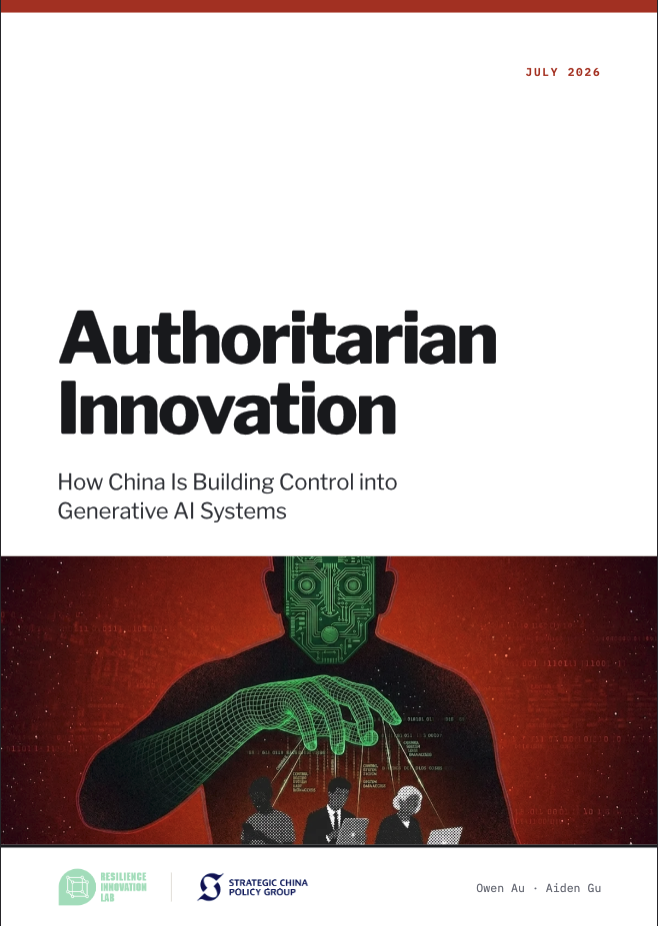
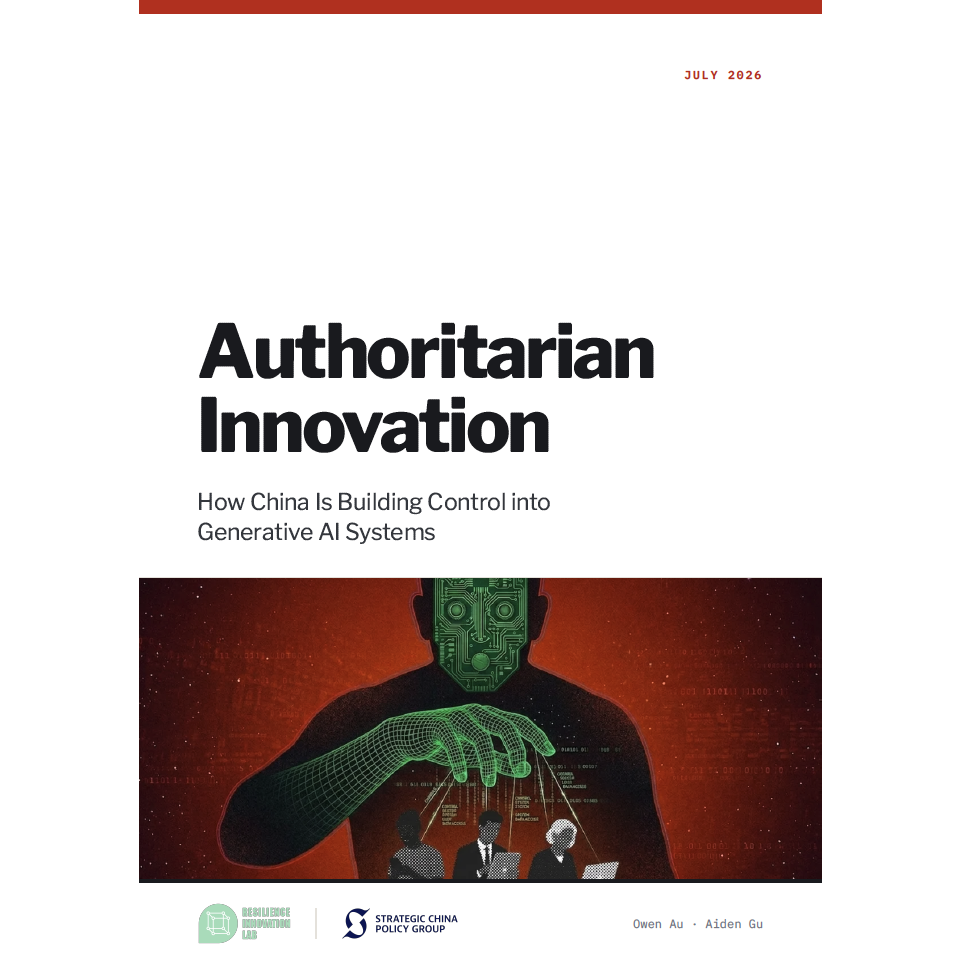
    A new report by Resilience Innovation Lab and Strategic China Policy Group argues that China is embedding political and information controls directly into the design and governance of generative AI systems. Drawing on official documents and technical standards, Authoritarian Innovation: How China Is Building Control into Generative AI Systems examines how Beijing’s content-security framework shapes training data, model behaviour and testing requirements across the AI development process.

    Key findings:

    1. China treats content that departs from Party narratives as a “content security risk” — built into AI systems from the ground up
    2. An expanding system of industrial standards now governs training data, model behaviour, and content testing across the entire AI pipeline
    3. Private firms like Alibaba and DeepSeek aren’t just regulated — they’re incorporated into the governance system itself
    4. As Chinese models spread abroad (7 of the world’s top 10 LLMs by usage are now Chinese), this control logic travels with them

    The report has received coverage from multiple international and Taiwanese media outlets, including Radio Taiwan International, Radio France Internationale, Taiwan’s Central News Agency and the Liberty Times.

    Read the report here.

    RightsCon Announces Follow-up Activities After Cancellation of 2026 Event

    Following the cancellation of RightsCon 2026, which had been due to take place in Zambia and online and was expected to bring together more than 5,000 digital rights advocates from around the world, the organiser, Access Now, have announced a new series of activities under the banner “RightsCon Continues” to sustain community exchange and advocacy. The first initiative will be a 24-hour global online summit on 22 September 2026, focused on resilience, adaptation and movement building. Through discussions, workshops, roundtables and networking sessions, the event will explore how the digital rights community can respond to an increasingly complex technology and human rights landscape. The organiser also plan to participate in partner events throughout the remainder of 2026, support community members in attending relevant conferences, and launch further initiatives to strengthen the global digital rights ecosystem.

    Click here to read the full announcement.

    Useful Resources

    Judicial Records in Hong Kong * has made every effort to collect court decisions related to the Anti-Extradition Bill Movement for educational and research purposes. These records are still accessible on the website of Hong Kong’s judiciary, but their continued availability to the public in the future remains uncertain. All judicial records collected and displayed here are secured and maintained using blockchain technology, through which they are decentralized and immutable, ensuring transparency, tamper-resistance, and trust in the integrity of the data. Our goal is to utilize blockchain as a form of censorship resistance to preserve invaluable public records. If there are any omissions in this database, please feel free to notify RIL’s research team: info.dap@protonmail.com .

    *To protect your identity and personal information, you are advised to use these online resources with an encrypted device and VPN.

    An Unbreakable Wall? Challenges and Opportunities of Defending Freedom of Information in China is RIL’s first research report on information environment in China. This report provides a comprehensive account of China’s information environment under the rule of the CCP. Drawing on evidence-based insights from multiple perspectives, the report seeks to inform a broad range of stakeholders—from policymakers and international businesses to civil society organisations and academic institutions—and encourages collaborative efforts to address the challenges posed by China’s information landscape and its impact on global information networks. The full report is now available on our website.

    Safeguarding Freedom of Information in Hong Kong: Challenges, Opportunities and Remedies is RIL’s second research report, focuding on information freedom in Hong Kong. The report systematically outlines how Hong Kong’s information access environment has been significantly constrained since the implementation of the Hong Kong National Security Law (HKNSL) in 2020 and the Safeguarding National Security Ordinance (SNSO) in 2024. These measures have severely curtailed press freedom and undermined the ability of civil society to hold the government accountable. They have encouraged the withholding of publicly available data and represent a departure from international human rights standards. Access to and dissemination of information is increasingly criminalised, resulting in diminished government transparency, suppression of the media, and reduced accessibility to data for businesses. The repercussions are being felt by journalists, the business sector, researchers, and international organisations alike. The report is published bilingually on our website.

    Authoritarian Innovation: How China Is Building Control into Generative AI Systems is RIL’s third report. Co-authored with Strategic China Policy Group (SCPG), the report draws on official sources and technical standards to examine how Beijing is embedding information control into large language models through its content security framework, standards, and model governance.

    Keeping Calm Amid Uncertainty: An Information Security Resilience Guide for Civil Society (Tradtional Chinese only) is a practical manual developed by RIL for Hong Kong civil society, diaspora communities, journalists, advocates, students, and community organisers seeking to strengthen their digital safety. The guide offers accessible advice on common information security risks, secure communications, device and account protection, AI-related privacy concerns, and digital preparation for travel or cross-border activities. Framing information security as both personal protection and collective care, the manual helps individuals and organisations reduce risks, safeguard trusted networks, and build stronger civic resilience in an uncertain political, legal, and technological environment.

    Working with Difficult Records Series is a webinar series organised by The National Archives UK. This series explores how archives can engage with challenging and sensitive records through people-centred and trauma-informed approaches. Bringing together scholars, practitioners, and sector experts, the sessions share practical case studies, reflections, and strategies that emphasise care, empathy, and community in archival work. Participants will gain insight into managing distressing material, supporting wellbeing, and applying trauma-informed practices to strengthen both professional practice and funding opportunities, while also building a collaborative community of practice. Topics include working with traumatic histories, criminal justice, medical and mental health records, social justice collections, and beneficiary-focused archives.

    Who we are?

    Resilience Innovation Lab (RIL) was founded by Asian veteran researchers and human rights defenders in 2023. RIL is a virtual platform promoting innovation, experimentation, and the exchange of research and educational initiatives that aim to develop and strengthen the democratic and digital resilience of organisations and individuals working in repressive environments.

    RIL envisions a synergy of democracy, technology and civil society resilience today, especially when authoritarianism emerges as a common threat to liberal democracies and open societies. Building the capacities of citizens and civil groups to respond to such a new environment with creative and innovative instruments is of paramount importance for their sustainable development.

    Our work focuses on researching Web3 technology, digital preservation of collective memory and history in conflict and post-conflict areas, and resilience of rule of law institutions and cultures in non-democratic regimes.

    Enquiry: info.ril@proton.me

  • Authoritarian Innovation: How China Is Building Control into Generative AI Systems

    Authoritarian Innovation: How China Is Building Control into Generative AI Systems

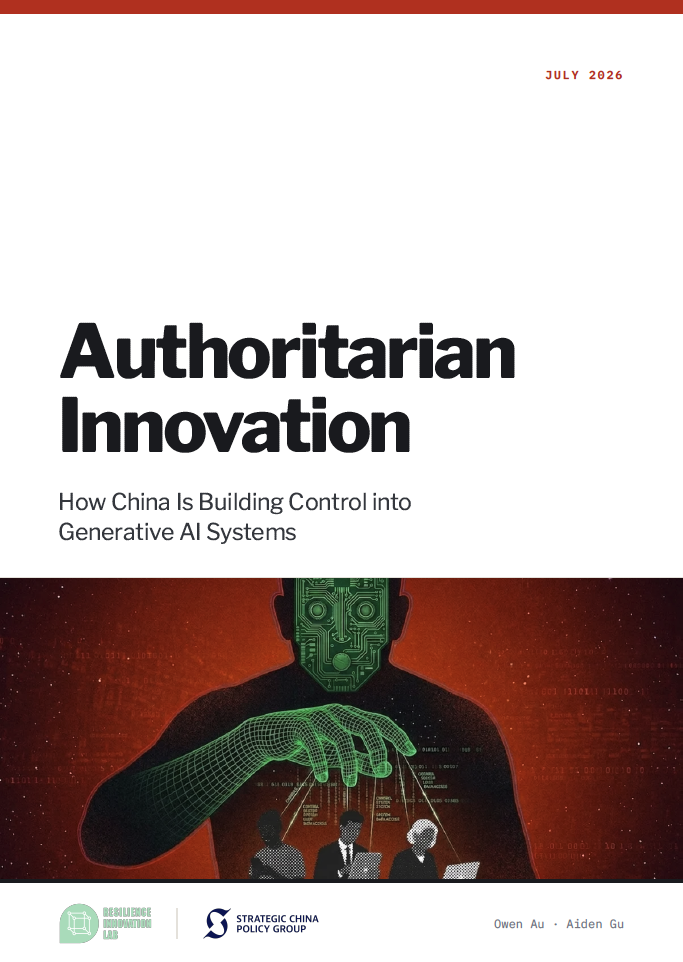
    Written by Resilience Innovation Lab (RIL) and Strategic China Policy Group (SCPG), the latest report, Authoritarian Innovation: How China Is Building Control into Generative AI Systems, draws on official sources and technical standards to examine how Beijing is embedding information control into large language models through its content security framework, standards, and model governance.

    Key findings:

    1. China treats content that departs from Party narratives as a “content security risk” — built into AI systems from the ground up
    2. An expanding system of industrial standards now governs training data, model behaviour, and content testing across the entire AI pipeline
    3. Private firms like Alibaba and DeepSeek aren’t just regulated — they’re incorporated into the governance system itself
    4. As Chinese models spread abroad (7 of the world’s top 10 LLMs by usage are now Chinese), this control logic travels with them

    Read the report here.