Blog

  • RIL Newsletter #2025-8

    RIL Newsletter #2025-8

    Welcome to Resilience Innovation Lab (RIL) ! Apologies for the late delivery of this newsletter as we have accomplished several events in May and June. In this newsletter, we will discuss the latest development of information access in Hong Kong, and share our fruits from events in London, UK.

    Civil Society Response to the Tightened Information Environment in Hong Kong

    In our previous issue, we highlighted the increasing constraints on the information environment in Hong Kong, particularly focusing on the alarming trend of public data being removed from government platforms.

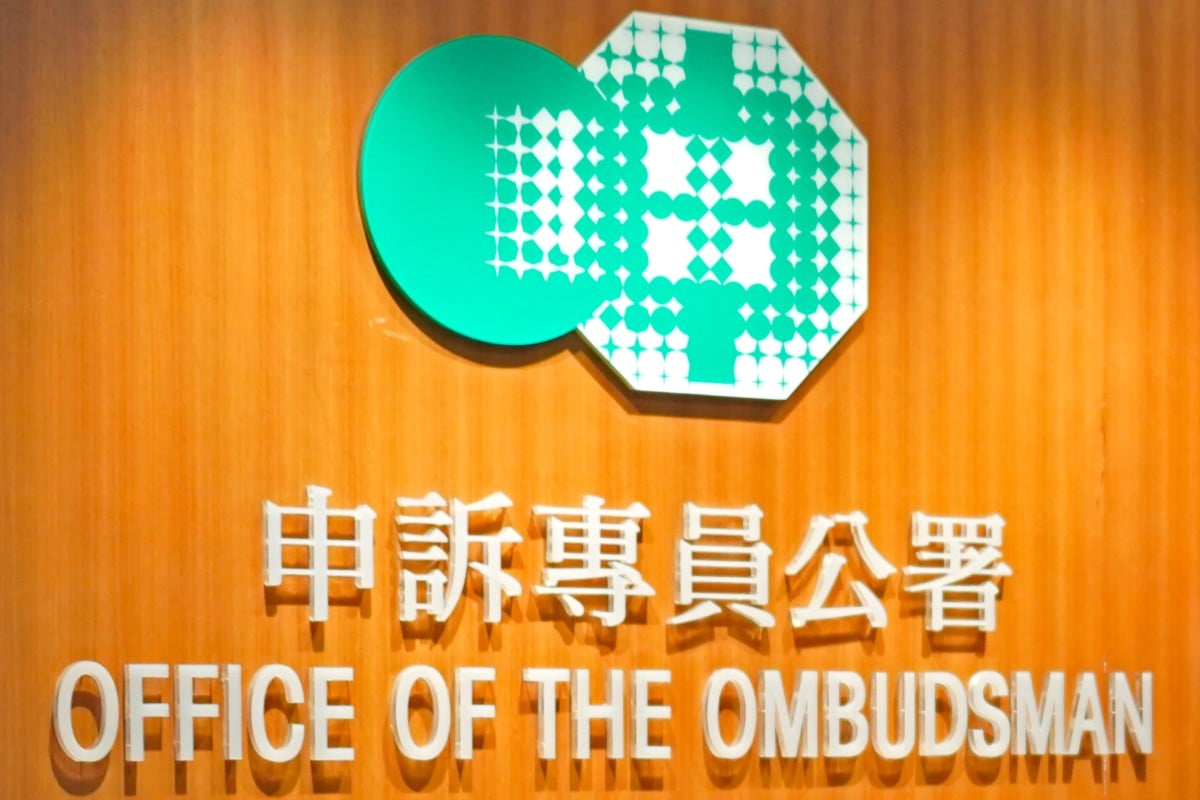
    This month, we are heartened to see the Hong Kong civil society stepping up in defence of public access to information. Following the Ombudsman’s removal of hundreds of investigation reports from its website, multiple civil society actors have come together to restore access by archiving and disseminating the withdrawn content.

    Backup repositories of the deleted reports were created by civil society members in Hong Kong, ensuring that these vital records remain accessible to the public, researchers, and journalists. Other community-led initiatives have meticulously documented and indexed the 238 removed reports, challenging the Ombudsman’s refusal to provide a formal catalogue of the materials withdraw.

    We deeply appreciate these efforts to preserve Hong Kong’s information heritage. These initiatives echo the key findings and recommendations in our April 2025 report, Safeguarding Freedom of Information in Hong Kong, where we emphasised the importance of decentralised archiving and the role of civil society in defending transparency (read full report).

    In times of systemic erasure, it is the resilience and innovation of civil society that keeps the light on.

    Read the community-led archived Ombudsman reports here:

    List of Direct Investigation (2014-2024)

    List of Ombudsman reports taken-down

    Hong Kong Ombudsman Reports Archive (OCR-processed)

    HK Ombudsman Unofficial Archive (1994-2025)

    Safeguarding Freedom of Information in Hong Kong

    Our research publication, Safeguarding Freedom of Information in Hong Kong: Challenges, Opportunities and Remedies, systematically outlines how Hong Kong’s information access environment has been significantly constrained since the implementation of the Hong Kong National Security Law (HKNSL) in 2020 and the Safeguarding National Security Ordinance (SNSO) in 2024. These measures have severely curtailed press freedom and undermined the ability of civil society to hold the government accountable. They have encouraged the withholding of publicly available data and represent a departure from international human rights standards.

    Access to and dissemination of information is increasingly criminalised, resulting in diminished government transparency, suppression of the media, and reduced accessibility to data for businesses. The repercussions are being felt by journalists, the business sector, researchers, and international organisations alike.

    We encourage you to share this report with stakeholders in your network and to continue monitoring the authorities’ performance in upholding the freedom to access and disseminate information.

    Download the Chinese version of the report here.

    Download the English version of the report here.

    “Ways of Remembering”

    Resilience Innovation Lab collaborated with Hong Kong Action Archives for the exhibition “Ways of Remembering” between 17 and 26 May, 2025.

    This exhibition brought together artefacts, personal stories, and collective memories from Hong Kong’s social movements over the past decades. Alongside these, the exhibition shed light on projects that employ archiving as a means of resistance. More than just a look at Hong Kong, this exhibition was an invitation for anyone interested in the act of collecting, remembering, and the ways in which history is written.

    The exhibition was successfully documented and appreciated by local and international media outlets, including Nüvoice, The Collective, The Point, Green Bean Media, Radio Free Asia, Tian Jian and Ming Pao.

    Useful Resources

    Judicial Records in Hong Kong * has made every effort to collect court decisions related to the Anti-Extradition Bill Movement for educational and research purposes. These records are still accessible on the website of Hong Kong’s judiciary, but their continued availability to the public in the future remains uncertain. All judicial records collected and displayed here are secured and maintained using blockchain technology, through which they are decentralized and immutable, ensuring transparency, tamper-resistance, and trust in the integrity of the data. Our goal is to utilize blockchain as a form of censorship resistance to preserve invaluable public records. If there are any omissions in this database, please feel free to notify RIL’s research team: info.dap@protonmail.com .

    China Open Courts * aims to preserve and provide public access to judicial records from the People’s Republic of China that are at risk of disappearing from official sources. Below is an overview of the methodology adopted in this project, including our data collection strategies, scope of coverage, and plans for ensuring continued accuracy and relevance of the information. Interested parties are welcome to reach out to our team at chinaopencourts@protonmail.com for further information, collaboration opportunities, or suggestions on additional keywords and topics to include.

    *To protect your identity and personal information, you are advised to use these online resources with an encrypted device and VPN.

    An Unbreakable Wall? Challenges and Opportunities of Defending Freedom of Information in China is RIL’s first research report on information environment in China. This report provides a comprehensive account of China’s information environment under the rule of the CCP. Drawing on evidence-based insights from multiple perspectives, the report seeks to inform a broad range of stakeholders—from policymakers and international businesses to civil society organisations and academic institutions—and encourages collaborative efforts to address the challenges posed by China’s information landscape and its impact on global information networks. The full report is now available on our website.

    Who we are?

    Resilience Innovation Lab (RIL) was founded by Asian veteran researchers and human rights defenders in 2023. RIL is a virtual platform promoting innovation, experimentation, and the exchange of research and educational initiatives that aim to develop and strengthen the democratic and digital resilience of organisations and individuals working in repressive environments.

    RIL envisions a synergy of democracy, technology and civil society resilience today, especially when authoritarianism emerges as a common threat to liberal democracies and open societies. Building the capacities of citizens and civil groups to respond to such a new environment with creative and innovative instruments is of paramount importance for their sustainable development.

    Our work focuses on researching Web3 technology, digital preservation of collective memory and history in conflict and post-conflict areas, and resilience of rule of law institutions and cultures in non-democratic regimes.

    Starting from the next issue, our newsletter will be published on a monthly basis. We warmly encourage you to share it within your community and invite others to subscribe!

  • RIL Newsletter #2026-05

    RIL Newsletter #2026-05

    Welcome to Resilience Innovation Lab (RIL). In this newsletter, we share highlights from g0v Summit 2026 and preview our first quarterly Threat Intelligence update, launching in June.

    Highlights from g0v Summit 2026

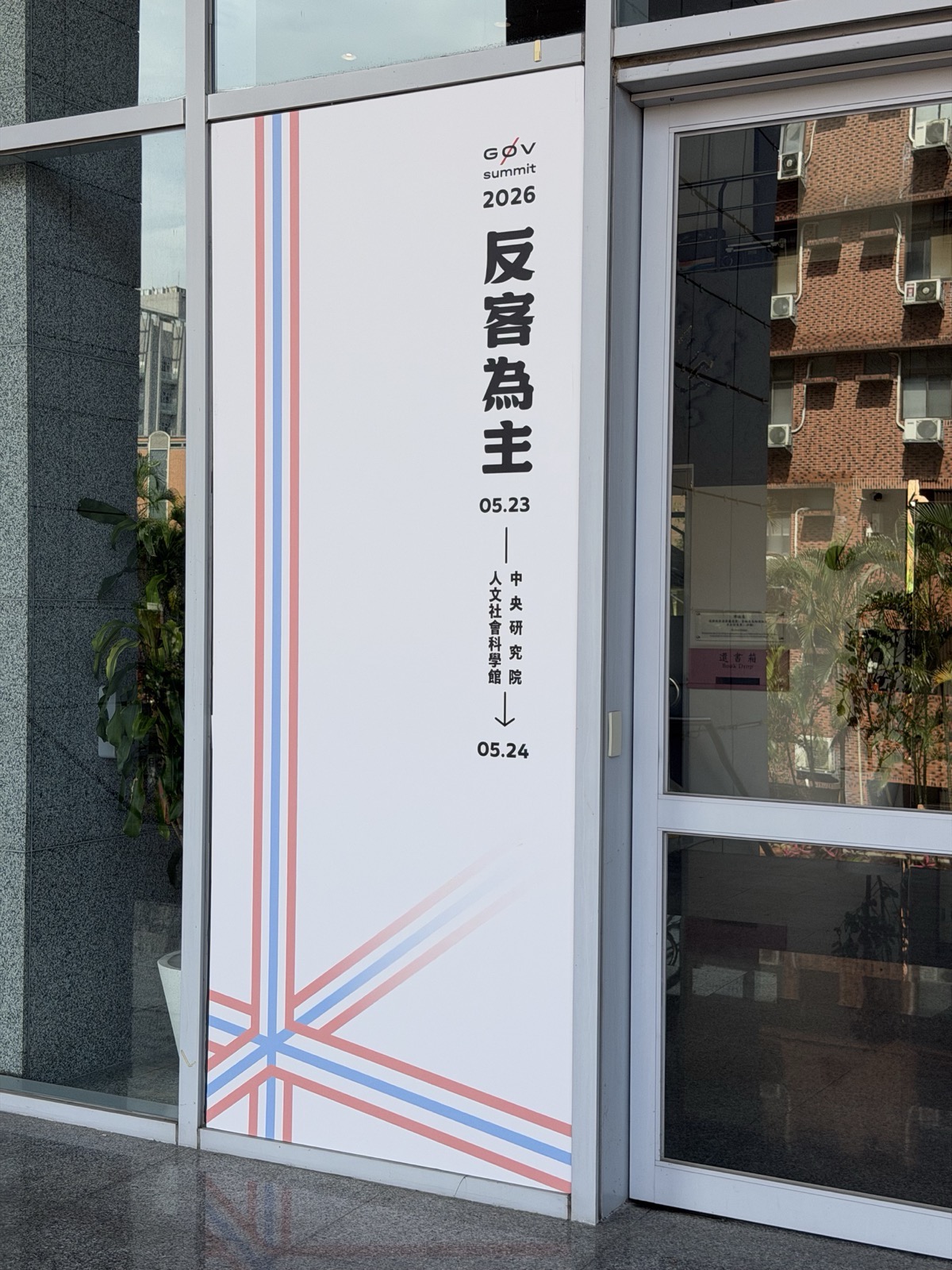
    g0v Summit 2026 was held in Taipei on 23–24 May under the theme “Power to the People”. The summit brought together civic technologists, journalists, researchers, designers, and civil society practitioners to discuss open data, digital rights, public participation, and democratic resilience.

    One Hong Kong-related session, “Open Work in a Closed Era: Loss and Regeneration of Hong Kong’s Public Data”, looked at how public data in Hong Kong has become harder to access in recent years. As some government datasets, policy documents, regulatory records and online archives are removed, restricted, or made difficult to search, it becomes harder for the public to access and verify information.

    As a response, some civic technologists have begun developing Resilient Digital Public Resources (RDPR), decentralised and harder-to-censor systems designed to replicate, preserve and validate public information while reducing reliance on a single official platform or centralised system. One of the speakers, Eric Lai, also briefly discussed how blockchain could be used in public data preservation, including the use of automated tools, metadata and distributed storage to keep public records accessible when original sources may disappear.

    The discussion also noted how restrictions justified on the grounds of national security and privacy are changing the way public data can be accessed. Speakers introduced different preservation efforts, including decentralised judicial and legislative repositories, government website captures, and event-based data collections. These efforts are not only about saving documents, but also about ensuring that sources, versions, and integrity can still be verified in the future.

    The session framed public data preservation as both an engineering and governance problem. When some public data becomes harder to access, or when original sources are no longer stable, community-led information infrastructure may provide an additional layer of protection, allowing records to remain accessible and verifiable despite platform changes and information instability.

    Data breach affecting Canvas users

    Instructure, the company behind the learning management platform Canvas, confirmed a cybersecurity incident this month involving user data from the platform. Canvas is used by schools, universities and education providers for course management, assignments and communication.

    According to Instructure, the affected data included some users’ names, email addresses, student IDs and messages between users. The company said it had no evidence that passwords, dates of birth, government identification numbers or financial information were affected.

    The hacking group ShinyHunters claimed responsibility for the breach. Instructure later reached an agreement with the group that included the return and deletion of stolen data, as well as a commitment not to extort Instructure customers. The full details of the agreement were not publicly disclosed.

    The case adds to wider concerns about third-party platform risk. Even when passwords or financial information are not exposed, data such as email addresses, IDs and internal messages can still be used to make phishing attempts or impersonation more convincing. For organisations and users that rely on external platforms for daily operations, the incident also shows how data security and vendor response are increasingly tied together.

    2026 Data Breach Investigations Report

    Verizon’s 2026 Data Breach Investigations Report found that the starting point for data breaches is shifting. Verizon analysed more than 31,000 security incidents and found that 31% of breaches began with the exploitation of software vulnerabilities, surpassing stolen credentials for the first time.

    The shift reflects how attackers are using AI to move faster. According to the report, AI is helping threat actors identify vulnerabilities, screen targets and develop attack tools more efficiently, reducing the time organisations have to patch exposed systems. The report also highlighted the growing risk of “Shadow AI”, where employees or users rely on unapproved AI tools for everyday work. This can include pasting documents, customer information, or internal materials into chatbots for summarising, translating, or troubleshooting. These uses can move sensitive information outside controlled systems.

    The report also shifts some attention away from passwords and phishing alone, and towards software vulnerabilities, third-party tools, cloud settings and everyday AI usage. As AI becomes more embedded in daily work, security settings such as chat history, data retention, model training and approved-tool policies are becoming increasingly relevant.

    FCC Press Freedom Survey

    The Foreign Correspondents’ Club Hong Kong published its 2026 FCC Press Freedom Survey, presenting views from Correspondent and Journalist members on the city’s media environment. The survey captures how journalists experience changes in their day-to-day work, including source engagement, editorial judgment, newsroom operations, and risk assessment.

    The survey shows that more respondents felt the working environment for journalists in Hong Kong had worsened over the past year, while sources had become less willing to be quoted or discuss sensitive topics. Respondents also indicated a clearer awareness of which subjects may be considered sensitive, with some reporting self-censorship in writing, editing, or avoiding certain topics, images, or angles.

    The survey also covered changes in newsroom staffing, employment visas, reporting conditions, and concerns over interference or surveillance. While not all respondents reported direct harassment or violence, many expressed concern about the possibility of digital or physical surveillance, arrest, or prosecution in connection with their work. These findings suggest that pressure on journalists is shaped by a combination of legal, political, operational, and institutional factors.

    These observations are also reflected in international press freedom assessments. In Reporters Without Borders 2026 World Press Freedom Index, Hong Kong ranked 140th out of 180 countries and territories, with an overall score of 39.49. Its political and legal indicators both ranked 148th, pointing to continued concerns around the institutional and regulatory environment for journalism.

    FCC President Morgan M. Davis noted that press freedom remains enshrined in Hong Kong law, but the survey results indicate that sentiment among journalists working in the city remains in flux.

    Threat Intelligence Digest

    We will be launching a quarterly Threat Intelligence Digest from this year. Each issue will highlight recent cybersecurity incidents, emerging attack trends, digital risks, and practical observations for individuals and organisations. The first issue will be released in June, covering topics such as recent data breaches, AI-related security risks, and third-party platform exposure.

    Archiving as Action: Community Archives Practice Workshop

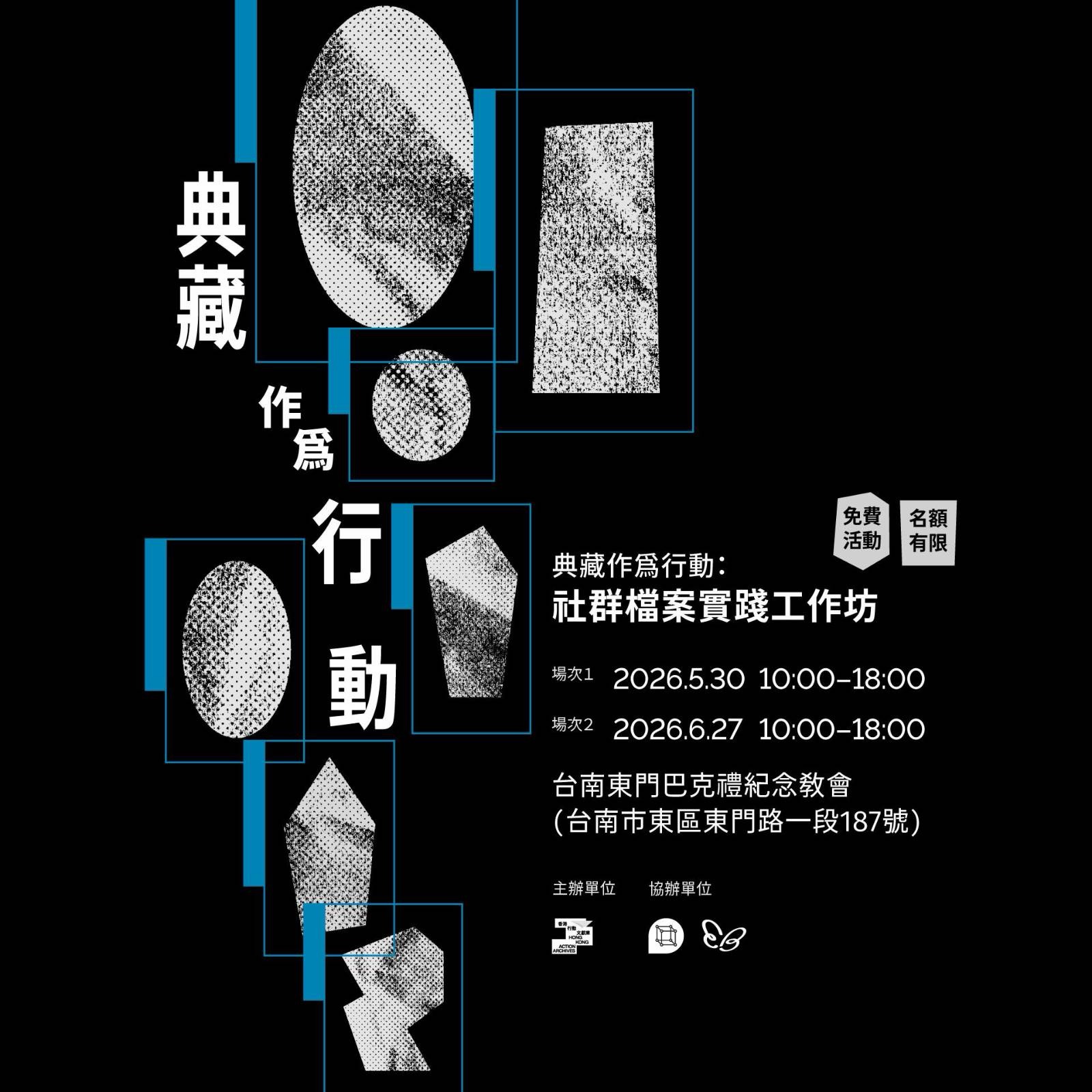
    RIL is pleased to co-host “Archiving as Action: Community Archives Practice Workshop” (典藏作為行動:社群檔案實踐工作坊), a two-part, full-day workshop series exploring how communities can preserve their own histories and turn collective memory into a foundation for future action.

    Rather than waiting for others to document our past, the workshop invites participants to take an active role in recording, organising and safeguarding community memories. Across theory and hands-on practice, participants will learn about archive activism, community archives and diverse approaches to preservation, while gaining beginner-friendly skills in caring for physical materials and cultural objects.

    The workshops will take place at Tainan East Gate Barclay Memorial Church in Taiwan, whose own work in heritage preservation and social practice will be introduced through a guided visit. Each session will also feature experience-sharing from practitioners involved in movement documentation, community memory work and advocacy.

    We are grateful for the enthusiastic response and support from the community. Both sessions are now fully booked, and we thank everyone who registered, shared the event and helped make this workshop possible.

    The workshop is organised by Hong Kong Action Archive, co-hosted by the social service department of Tainan East Gate Barclay Memorial Church and Resilience Innovation Lab.

    Useful Resources

    Judicial Records in Hong Kong * has made every effort to collect court decisions related to the Anti-Extradition Bill Movement for educational and research purposes. These records are still accessible on the website of Hong Kong’s judiciary, but their continued availability to the public in the future remains uncertain. All judicial records collected and displayed here are secured and maintained using blockchain technology, through which they are decentralized and immutable, ensuring transparency, tamper-resistance, and trust in the integrity of the data. Our goal is to utilize blockchain as a form of censorship resistance to preserve invaluable public records. If there are any omissions in this database, please feel free to notify RIL’s research team: info.dap@protonmail.com .

    China Open Courts * aims to preserve and provide public access to judicial records from the People’s Republic of China that are at risk of disappearing from official sources. Below is an overview of the methodology adopted in this project, including our data collection strategies, scope of coverage, and plans for ensuring continued accuracy and relevance of the information. Interested parties are welcome to reach out to our team at chinaopencourts@protonmail.com for further information, collaboration opportunities, or suggestions on additional keywords and topics to include.

    *To protect your identity and personal information, you are advised to use these online resources with an encrypted device and VPN.

    An Unbreakable Wall? Challenges and Opportunities of Defending Freedom of Information in China is RIL’s first research report on information environment in China. This report provides a comprehensive account of China’s information environment under the rule of the CCP. Drawing on evidence-based insights from multiple perspectives, the report seeks to inform a broad range of stakeholders—from policymakers and international businesses to civil society organisations and academic institutions—and encourages collaborative efforts to address the challenges posed by China’s information landscape and its impact on global information networks. The full report is now available on our website.

    Safeguarding Freedom of Information in Hong Kong: Challenges, Opportunities and Remedies is RIL’s second research report, focuding on information freedom in Hong Kong. The report systematically outlines how Hong Kong’s information access environment has been significantly constrained since the implementation of the Hong Kong National Security Law (HKNSL) in 2020 and the Safeguarding National Security Ordinance (SNSO) in 2024. These measures have severely curtailed press freedom and undermined the ability of civil society to hold the government accountable. They have encouraged the withholding of publicly available data and represent a departure from international human rights standards. Access to and dissemination of information is increasingly criminalised, resulting in diminished government transparency, suppression of the media, and reduced accessibility to data for businesses. The repercussions are being felt by journalists, the business sector, researchers, and international organisations alike. The report is published bilingually on our website.

    Working with Difficult Records Series is a webinar series organised by The National Archives UK. This series explores how archives can engage with challenging and sensitive records through people-centred and trauma-informed approaches. Bringing together scholars, practitioners, and sector experts, the sessions share practical case studies, reflections, and strategies that emphasise care, empathy, and community in archival work. Participants will gain insight into managing distressing material, supporting wellbeing, and applying trauma-informed practices to strengthen both professional practice and funding opportunities, while also building a collaborative community of practice. Topics include working with traumatic histories, criminal justice, medical and mental health records, social justice collections, and beneficiary-focused archives.

    Who we are?

    Resilience Innovation Lab (RIL) was founded by Asian veteran researchers and human rights defenders in 2023. RIL is a virtual platform promoting innovation, experimentation, and the exchange of research and educational initiatives that aim to develop and strengthen the democratic and digital resilience of organisations and individuals working in repressive environments.

    RIL envisions a synergy of democracy, technology and civil society resilience today, especially when authoritarianism emerges as a common threat to liberal democracies and open societies. Building the capacities of citizens and civil groups to respond to such a new environment with creative and innovative instruments is of paramount importance for their sustainable development.

    Our work focuses on researching Web3 technology, digital preservation of collective memory and history in conflict and post-conflict areas, and resilience of rule of law institutions and cultures in non-democratic regimes.

    Enquiry: info.ril@proton.me

  • RIL Newsletter #2026-04

    RIL Newsletter #2026-04

    Welcome to Resilience Innovation Lab (RIL). In this newsletter, we will share updates on RightsCon 2026 and upcoming archiving workshop co-hosted by RIL.

    RightsCon 2026 cancellation raises alarm over  Chinese interference

    RightsCon 2026, the global summit on human rights and technology due to take place in Lusaka, Zambia, from 5–8 May, was effectively cancelled days before it was scheduled to open after the Zambian government announced an open-ended postponement. The event was expected to bring together thousands of participants from more than 150 countries to discuss digital rights issues including censorship, surveillance, AI governance, disinformation and internet shutdowns.

    Access Now, the organiser of RightsCon, said it believes the cancellation was driven by foreign interference from the People’s Republic of China. According to the organisation, Zambian officials indicated that Chinese diplomats had objected to the participation of Taiwanese civil society representatives. Access Now also said it was later informed through informal channels that the event could only proceed if certain topics were moderated and at-risk communities, including Taiwanese participants, were excluded from both in-person and online participation.

    The incident has raised wider concerns about China’s ability to exert pressure beyond its borders in order to shape international civic spaces. Human rights groups have described the reported intervention as part of a broader pattern of transnational repression, particularly around efforts to exclude Taiwanese voices and limit criticism of authoritarian technology practices. Amnesty International characterised the postponement as an apparent act of Chinese transnational repression, while Human Rights Watch said the decision raised concerns about both Zambia’s commitment to free expression and possible Chinese government interference.

    For the global digital rights community, the cancellation is more than a logistical setback. It highlights how geopolitical pressure, particularly from powerful states such as China, can restrict who is allowed to take part in global human rights conversations and what issues can be discussed. It also raises urgent questions about the independence of international convenings, the protection of Taiwanese and other at-risk civil society actors, and the shrinking space for open debate on technology, democracy and human rights.

    Hong Kong’s annual archive destruction figures are a timely reminder of the need for an Archives Law

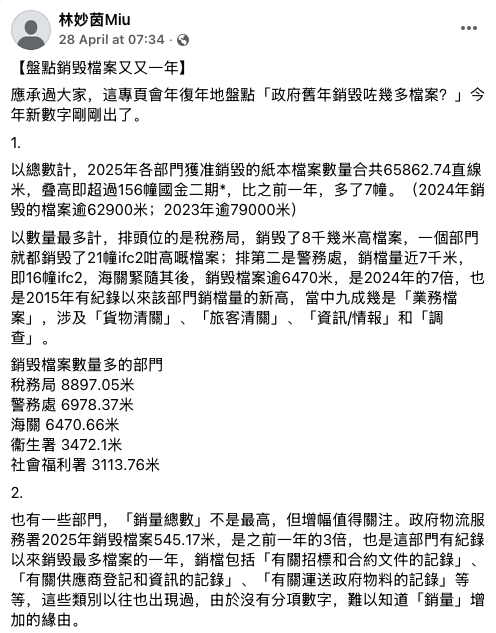
    A recent social media post by Hong Kong journalist Miu Yan Lam reviews newly released figures on government records approved for destruction in 2025, continuing her annual effort to track how much public material is being discarded. According to the post, government departments were approved to destroy 65,862.74 linear metres of paper records in 2025 — enough, if stacked vertically, to exceed the height of 156 Two IFC Towers. This was higher than 2024, when more than 62,900 metres were destroyed, but lower than the 2023 figure of more than 79,000 metres.

    The largest volumes came from the Inland Revenue Department at 8,897.05 metres, followed by the Hong Kong Police Force at 6,978.37 metres and the Customs and Excise Department at 6,470.66 metres. Lam notes that Customs’ figure was about seven times its 2024 level and appears to be the department’s highest since records began in 2015, with most of the destroyed files classified as programme records relating to cargo clearance, passenger clearance, intelligence and investigations.

    The post also highlights departments where the overall volume was lower but the year-on-year increase was notable. The Government Logistics Department destroyed 545.17 metres of records, roughly three times the previous year and its highest recorded figure. The Independent Commission Against Corruption destroyed more than 536 metres, including files relating to media publicity, external affairs, investigation cases and operational support. The Buildings Department destroyed 1,398 metres, a five-year high, while the Home Affairs Department rose to 1,345.52 metres.

    The broader concern raised by Lam’s post is not simply the quantity of records destroyed, but the weakness of Hong Kong’s public archives regime. Under the current system, departments must seek approval before destroying government records, but critics have long argued that the framework relies too heavily on administrative rules rather than legally binding obligations.

    The post connects the latest destruction figures to the long-delayed debate over an Archives Law. Hong Kong’s Ombudsman previously recommended legislation to strengthen public records management, while the Law Reform Commission began studying the issue in 2013 and published a consultation paper in 2018. However, more than seven years after that consultation, its final report has still not been released.

    Lam presents the annual tally as a reminder that without stronger legal safeguards, independent oversight and clearer disclosure, the destruction of government records may continue to outpace public understanding of what is being lost.

    Archiving as Action: Community Archives Practice Workshop

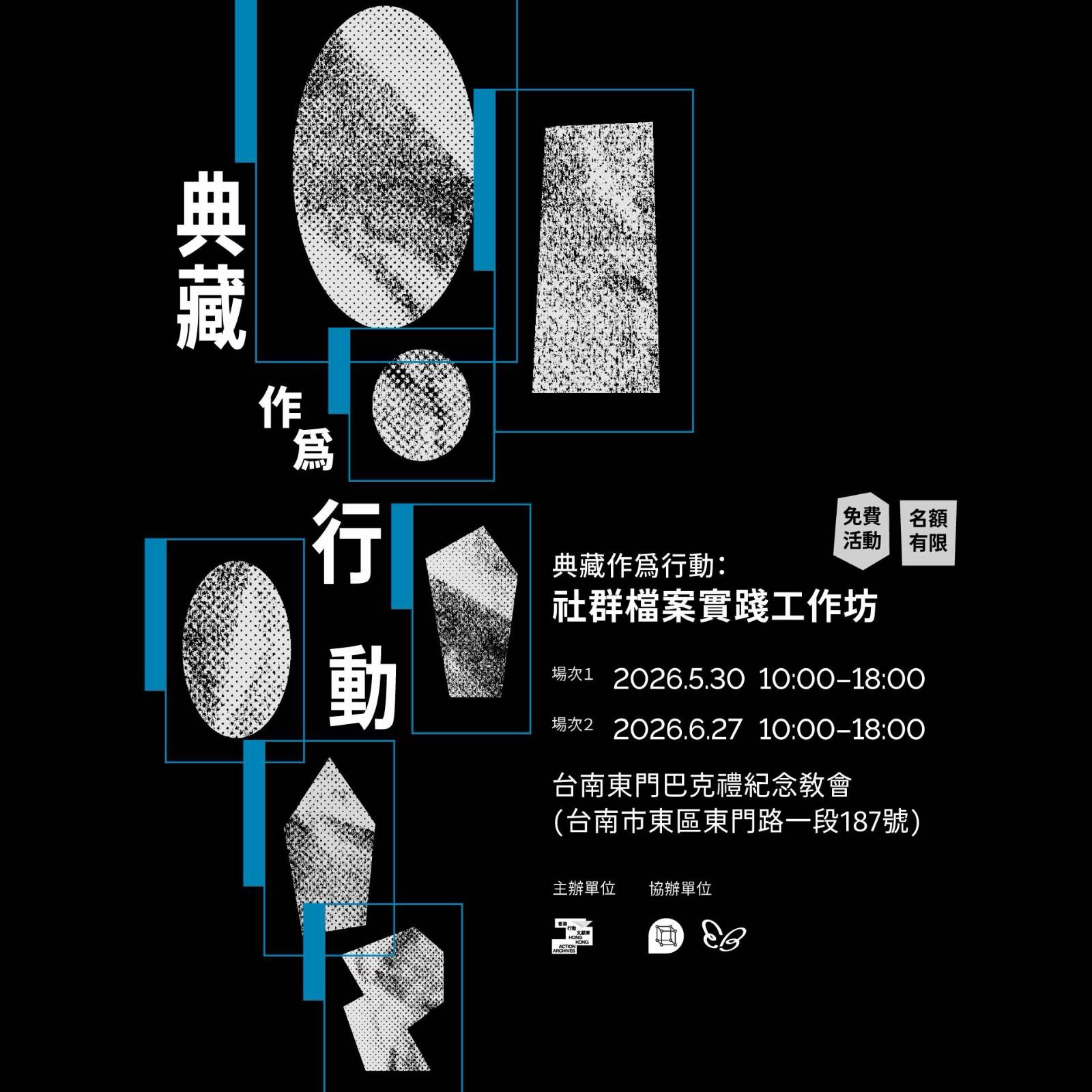
    RIL is pleased to co-host “Archiving as Action: Community Archives Practice Workshop” (典藏作為行動:社群檔案實踐工作坊), a two-part, full-day workshop series exploring how communities can preserve their own histories and turn collective memory into a foundation for future action.

    Rather than waiting for others to document our past, the workshop invites participants to take an active role in recording, organising and safeguarding community memories. Across theory and hands-on practice, participants will learn about archive activism, community archives and diverse approaches to preservation, while gaining beginner-friendly skills in caring for physical materials and cultural objects.

    The workshops will take place at Tainan East Gate Barclay Memorial Church in Taiwan, whose own work in heritage preservation and social practice will be introduced through a guided visit. Each session will also feature experience-sharing from practitioners involved in movement documentation, community memory work and advocacy.

    We are grateful for the enthusiastic response and support from the community. Both sessions are now fully booked, and we thank everyone who registered, shared the event and helped make this workshop possible.

    The workshop is organised by Hong Kong Action Archive, co-hosted by the social service department of Tainan East Gate Barclay Memorial Church and Resilience Innovation Lab.

    Useful Resources

    Judicial Records in Hong Kong * has made every effort to collect court decisions related to the Anti-Extradition Bill Movement for educational and research purposes. These records are still accessible on the website of Hong Kong’s judiciary, but their continued availability to the public in the future remains uncertain. All judicial records collected and displayed here are secured and maintained using blockchain technology, through which they are decentralized and immutable, ensuring transparency, tamper-resistance, and trust in the integrity of the data. Our goal is to utilize blockchain as a form of censorship resistance to preserve invaluable public records. If there are any omissions in this database, please feel free to notify RIL’s research team: info.dap@protonmail.com .

    China Open Courts * aims to preserve and provide public access to judicial records from the People’s Republic of China that are at risk of disappearing from official sources. Below is an overview of the methodology adopted in this project, including our data collection strategies, scope of coverage, and plans for ensuring continued accuracy and relevance of the information. Interested parties are welcome to reach out to our team at chinaopencourts@protonmail.com for further information, collaboration opportunities, or suggestions on additional keywords and topics to include.

    *To protect your identity and personal information, you are advised to use these online resources with an encrypted device and VPN.

    An Unbreakable Wall? Challenges and Opportunities of Defending Freedom of Information in China is RIL’s first research report on information environment in China. This report provides a comprehensive account of China’s information environment under the rule of the CCP. Drawing on evidence-based insights from multiple perspectives, the report seeks to inform a broad range of stakeholders—from policymakers and international businesses to civil society organisations and academic institutions—and encourages collaborative efforts to address the challenges posed by China’s information landscape and its impact on global information networks. The full report is now available on our website.

    Safeguarding Freedom of Information in Hong Kong: Challenges, Opportunities and Remedies is RIL’s second research report, focuding on information freedom in Hong Kong. The report systematically outlines how Hong Kong’s information access environment has been significantly constrained since the implementation of the Hong Kong National Security Law (HKNSL) in 2020 and the Safeguarding National Security Ordinance (SNSO) in 2024. These measures have severely curtailed press freedom and undermined the ability of civil society to hold the government accountable. They have encouraged the withholding of publicly available data and represent a departure from international human rights standards. Access to and dissemination of information is increasingly criminalised, resulting in diminished government transparency, suppression of the media, and reduced accessibility to data for businesses. The repercussions are being felt by journalists, the business sector, researchers, and international organisations alike. The report is published bilingually on our website.

    Working with Difficult Records Series is a webinar series organised by The National Archives UK. This series explores how archives can engage with challenging and sensitive records through people-centred and trauma-informed approaches. Bringing together scholars, practitioners, and sector experts, the sessions share practical case studies, reflections, and strategies that emphasise care, empathy, and community in archival work. Participants will gain insight into managing distressing material, supporting wellbeing, and applying trauma-informed practices to strengthen both professional practice and funding opportunities, while also building a collaborative community of practice. Topics include working with traumatic histories, criminal justice, medical and mental health records, social justice collections, and beneficiary-focused archives.

    Who we are?

    Resilience Innovation Lab (RIL) was founded by Asian veteran researchers and human rights defenders in 2023. RIL is a virtual platform promoting innovation, experimentation, and the exchange of research and educational initiatives that aim to develop and strengthen the democratic and digital resilience of organisations and individuals working in repressive environments.

    RIL envisions a synergy of democracy, technology and civil society resilience today, especially when authoritarianism emerges as a common threat to liberal democracies and open societies. Building the capacities of citizens and civil groups to respond to such a new environment with creative and innovative instruments is of paramount importance for their sustainable development.

    Our work focuses on researching Web3 technology, digital preservation of collective memory and history in conflict and post-conflict areas, and resilience of rule of law institutions and cultures in non-democratic regimes.

    Enquiry: info.ril@proton.me

  • RIL Newsletter #2026-03

    RIL Newsletter #2026-03

    Welcome to Resilience Innovation Lab (RIL). Before diving into this month’s newsletter, we would like to send you our Easter wishes—may the season bring fresh beginnings, joy, and a touch of springtime warmth.

    In this newsletter, we will share updates on the new bylaw under Hong Kong’s National Security Law (NSL).

    Hong Kong’s New NSL Amendments Expand Enforcement Powers and Raise Civil Liberties Concerns

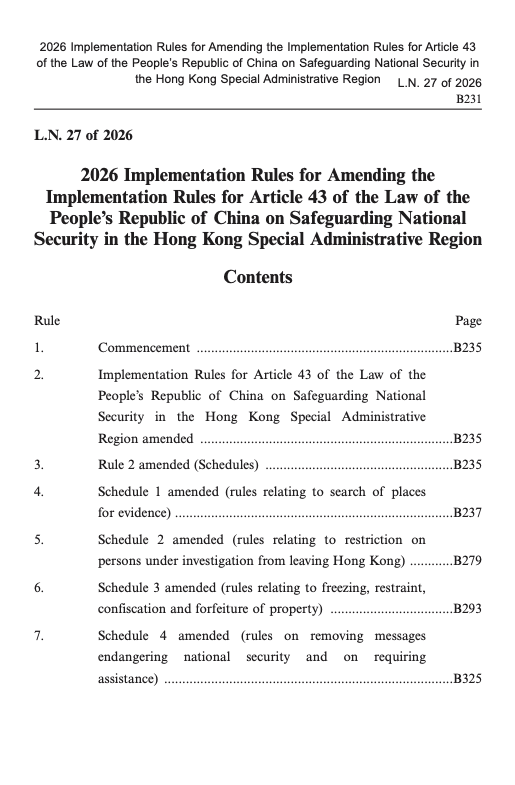
    On 23 March 2026, the Hong Kong government gazetted amendments to the NSL’s implementation rules, and they took effect immediately. The government says the changes are meant to strengthen enforcement, clarify procedures and reflect practical experience from recent cases, while preserving judicial gatekeeping for certain measures.

    The most notable change is a new mechanism allowing police, in national security investigations, to require a specified person to provide passwords, decryption methods or other assistance to access electronic devices. News reporting says refusal can lead to up to one year’s imprisonment and a HK$100,000 fine, while providing false or misleading information can carry up to three years’ imprisonment and a HK$500,000 fine.

    The amendments also tighten procedures around legal professional privilege, clarify penalties for breaching departure restrictions, and expand powers relating to property confiscation, seizure of items suspected of having a seditious intention, and the removal or restriction of certain electronic messages. Taken together, these measures suggest a system that is becoming not only more detailed, but more intrusive and easier for authorities to use in practice.

    For individuals, their personal devices, communications and online activity may now be more vulnerable to compelled access, while tighter procedures around legal professional privilege and stronger travel-related restrictions could make it harder for affected persons to protect their rights. The cumulative effect may be a further chilling effect on expression, association and the handling of confidential materials.

    For businesses, especially companies handling sensitive data, the amendments raise both compliance and operational risks. Firms may need stronger protocols for device access requests, encryption and key management, privilege review, document retention, staff travel, content moderation and supply-chain screening, particularly where employees, goods, funds or cross-border data flows could become linked to an investigation.

    The expanded decryption powers, tighter timelines for asserting privilege, broader content-removal powers and increased confidentiality around certain notices as raising fresh concerns about privacy, freedom of expression, access to legal advice, due process and the practical ability to challenge official decisions. Even where safeguards formally exist, critics may question how meaningful those protections are in practice when compliance obligations are immediate, penalties are severe and the scope of national security enforcement continues to widen.

    Useful Resources

    Judicial Records in Hong Kong * has made every effort to collect court decisions related to the Anti-Extradition Bill Movement for educational and research purposes. These records are still accessible on the website of Hong Kong’s judiciary, but their continued availability to the public in the future remains uncertain. All judicial records collected and displayed here are secured and maintained using blockchain technology, through which they are decentralized and immutable, ensuring transparency, tamper-resistance, and trust in the integrity of the data. Our goal is to utilize blockchain as a form of censorship resistance to preserve invaluable public records. If there are any omissions in this database, please feel free to notify RIL’s research team: info.dap@protonmail.com .

    China Open Courts * aims to preserve and provide public access to judicial records from the People’s Republic of China that are at risk of disappearing from official sources. Below is an overview of the methodology adopted in this project, including our data collection strategies, scope of coverage, and plans for ensuring continued accuracy and relevance of the information. Interested parties are welcome to reach out to our team at chinaopencourts@protonmail.com for further information, collaboration opportunities, or suggestions on additional keywords and topics to include.

    *To protect your identity and personal information, you are advised to use these online resources with an encrypted device and VPN.

    An Unbreakable Wall? Challenges and Opportunities of Defending Freedom of Information in China is RIL’s first research report on information environment in China. This report provides a comprehensive account of China’s information environment under the rule of the CCP. Drawing on evidence-based insights from multiple perspectives, the report seeks to inform a broad range of stakeholders—from policymakers and international businesses to civil society organisations and academic institutions—and encourages collaborative efforts to address the challenges posed by China’s information landscape and its impact on global information networks. The full report is now available on our website.

    Safeguarding Freedom of Information in Hong Kong: Challenges, Opportunities and Remedies is RIL’s second research report, focuding on information freedom in Hong Kong. The report systematically outlines how Hong Kong’s information access environment has been significantly constrained since the implementation of the Hong Kong National Security Law (HKNSL) in 2020 and the Safeguarding National Security Ordinance (SNSO) in 2024. These measures have severely curtailed press freedom and undermined the ability of civil society to hold the government accountable. They have encouraged the withholding of publicly available data and represent a departure from international human rights standards. Access to and dissemination of information is increasingly criminalised, resulting in diminished government transparency, suppression of the media, and reduced accessibility to data for businesses. The repercussions are being felt by journalists, the business sector, researchers, and international organisations alike. The report is published bilingually on our website.

    Working with Difficult Records Series is a webinar series organised by The National Archives UK. This series explores how archives can engage with challenging and sensitive records through people-centred and trauma-informed approaches. Bringing together scholars, practitioners, and sector experts, the sessions share practical case studies, reflections, and strategies that emphasise care, empathy, and community in archival work. Participants will gain insight into managing distressing material, supporting wellbeing, and applying trauma-informed practices to strengthen both professional practice and funding opportunities, while also building a collaborative community of practice. Topics include working with traumatic histories, criminal justice, medical and mental health records, social justice collections, and beneficiary-focused archives.

    Who we are?

    Resilience Innovation Lab (RIL) was founded by Asian veteran researchers and human rights defenders in 2023. RIL is a virtual platform promoting innovation, experimentation, and the exchange of research and educational initiatives that aim to develop and strengthen the democratic and digital resilience of organisations and individuals working in repressive environments.

    RIL envisions a synergy of democracy, technology and civil society resilience today, especially when authoritarianism emerges as a common threat to liberal democracies and open societies. Building the capacities of citizens and civil groups to respond to such a new environment with creative and innovative instruments is of paramount importance for their sustainable development.

    Our work focuses on researching Web3 technology, digital preservation of collective memory and history in conflict and post-conflict areas, and resilience of rule of law institutions and cultures in non-democratic regimes.

    Enquiry: info.ril@proton.me

  • RIL Newsletter #2026-02

    RIL Newsletter #2026-02

    Welcome to Resilience Innovation Lab (RIL). As we welcome the Year of Horse, RIL would like to extend our heartfelt wishes to you for a year filled with peace, good health, and renewed hope.

    In this newsletter, we will share updates on news related to the freedom of information in Hong Kong and China and updates on Hong Kong judicual records database.

    Hong Kong Student Becomes First Whistleblower Arrested Under Anti-Doxxing Law

    In what appears to be the first known case of a whistleblower being arrested for alleged doxxing in Hong Kong, Hailey Cheng, a student from the City University of Hong Kong, has been arrested following her role in exposing an academic integrity controversy linked to the AI medical app “MediSafe”.

    The student had previously raised public concerns about the app’s development, questioning both the authenticity of claims surrounding its creation and whether proper safeguards were in place regarding the use of medical data. Her disclosures sparked widespread debate about academic standards and oversight. However, police have now arrested her on suspicion of violating Hong Kong’s anti-doxxing provisions under the Personal Data (Privacy) (Amendment) Ordinance, alleging that she disclosed personal data without consent in a manner that caused harm.

    The case marks a significant development in the application of Hong Kong’s strengthened privacy regime, as it is the first time doxxing legislation has reportedly been used against an individual who had positioned herself as a whistleblower acting in the public interest.

    The arrest underscores the significant legal risks faced by individuals who speak out on matters of public interest in Hong Kong. Even where concerns relate to academic integrity or data governance, whistleblowers may find themselves exposed to criminal liability under the city’s strengthened anti-doxxing provisions if their disclosures are deemed to involve personal data published without consent. This carries a potential chilling effect, particularly for students, researchers and professionals who may think twice before questioning high-profile projects or institutions. The application of Hong Kong’s 2021 amendments to the Personal Data (Privacy) Ordinance — introduced to curb harassment and protect privacy — now raises difficult questions about where legitimate whistleblowing ends and unlawful disclosure begins. Set against a broader backdrop of heightened legal scrutiny of activists, journalists and academics, the case may further narrow the space for open debate and reinforce self-censorship in matters of public concern.

    Hong Kong Student Expelled After Petition Over Tai Po Fire

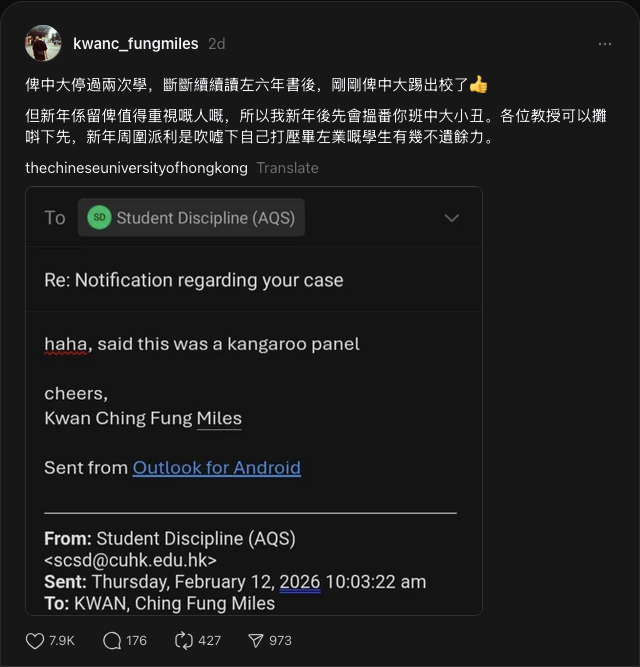
    The Chinese University of Hong Kong (CUHK) has recently expelled a 24-year-old student.

    Miles Kwan launched an online petition following the Tai Po Wang Fuk Court fire in November 2025, which claimed the lives of more than 168 people. The petition called for the establishment of an independent commission of inquiry into the blaze, support for displaced residents, a review of building regulatory oversight and government responsibility. It quickly garnered more than 10,000 signatures online before being removed. Kwan was arrested by the National Security Police in late November on suspicion of sedition and was subsequently released on bail. He stated that, in deciding to expel him, the university cited his previous disciplinary record and alleged breaches of confidentiality.

    The case has drawn public attention to the state of freedom of expression and freedom of information in Hong Kong, with several human rights organisations urging the authorities to allow an open inquiry and public discussion of the tragedy.

    China Scales Back Judicial Transparency

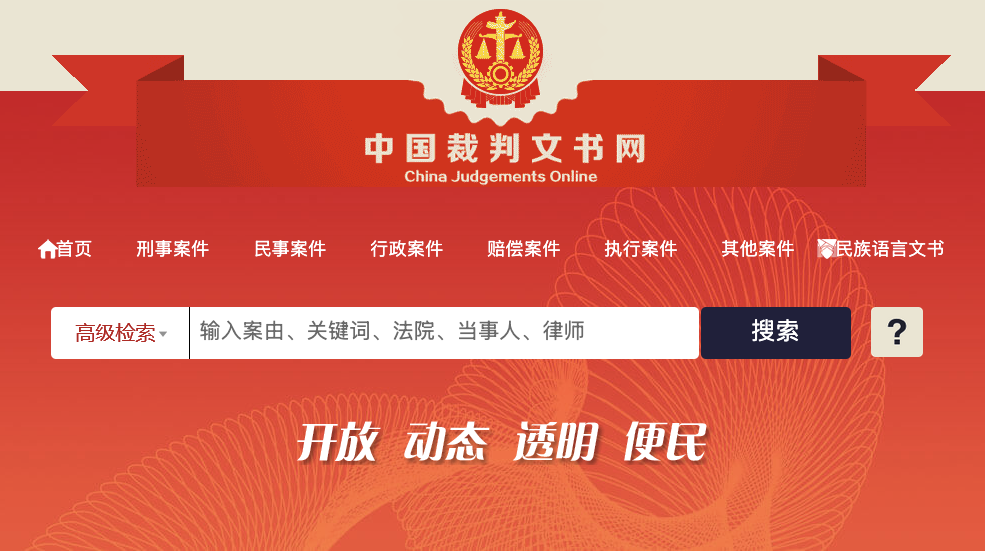
    According to Radio Free Aisa Chinese, China has significantly reduced the number of court judgments published on its official judicial database, prompting concern among lawyers and legal scholars. The platform, China Judgments Online, was once presented as a flagship initiative to promote judicial transparency and public oversight. However, recent reports indicate that the volume of publicly available rulings has fallen sharply. In many cases, detailed judgments have been replaced with brief summaries, limited notices, or heavily redacted information.

    Legal professionals warn that this shift makes it increasingly difficult to understand how courts reach their decisions. Missing case details — such as judges’ names, legal reasoning and full factual accounts — weaken the ability of lawyers to compare similar cases or assess consistency in the application of the law. Notably, there has been no clear public explanation from the Supreme People’s Court regarding the reduction in published material.

    The implications extend beyond the legal profession. Judicial transparency has long been viewed as one of the few areas in which the Chinese government appeared to embrace limited institutional openness. The online publication of rulings allowed researchers, businesses and ordinary citizens to observe how laws were interpreted and enforced. The contraction of this access signals a broader tightening of information control.

    For freedom of information in China, the development is significant. Reduced access to court decisions limits public scrutiny and diminishes accountability within the legal system. It also contributes to a more opaque governance environment, where the reasoning behind state decisions becomes harder to examine. As information channels narrow, concerns grow that transparency — once cautiously expanded — is now being steadily rolled back.

    Updates on Judicial Records in Hong Kong database

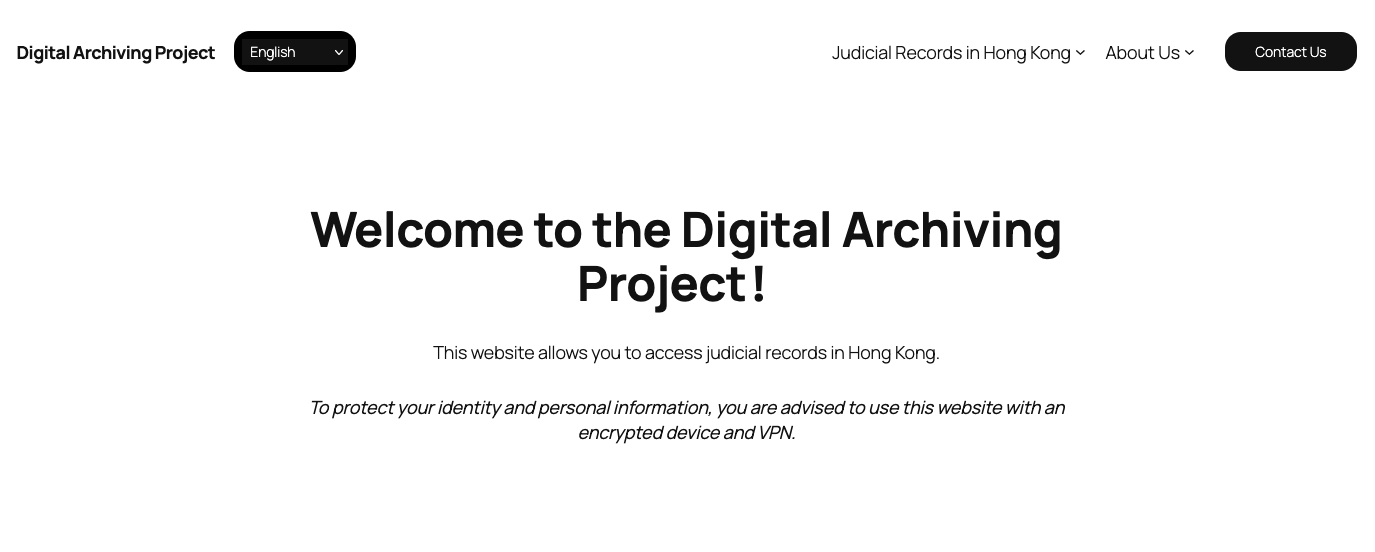
    The Judicial Records in Hong Kong database is an open, searchable online platform that compiles judicial decisions and case details relating to the Anti-Extradition Bill Movement in Hong Kong. The database seeks to preserve publicly available judicial documents, particularly those of historical or research significance that may later be removed or become inaccessible due to their sensitive nature. By organising and presenting these records in a centralised digital format, the project supports legal researchers, journalists, civil society groups and members of the public in analysing trends within Hong Kong’s legal system.

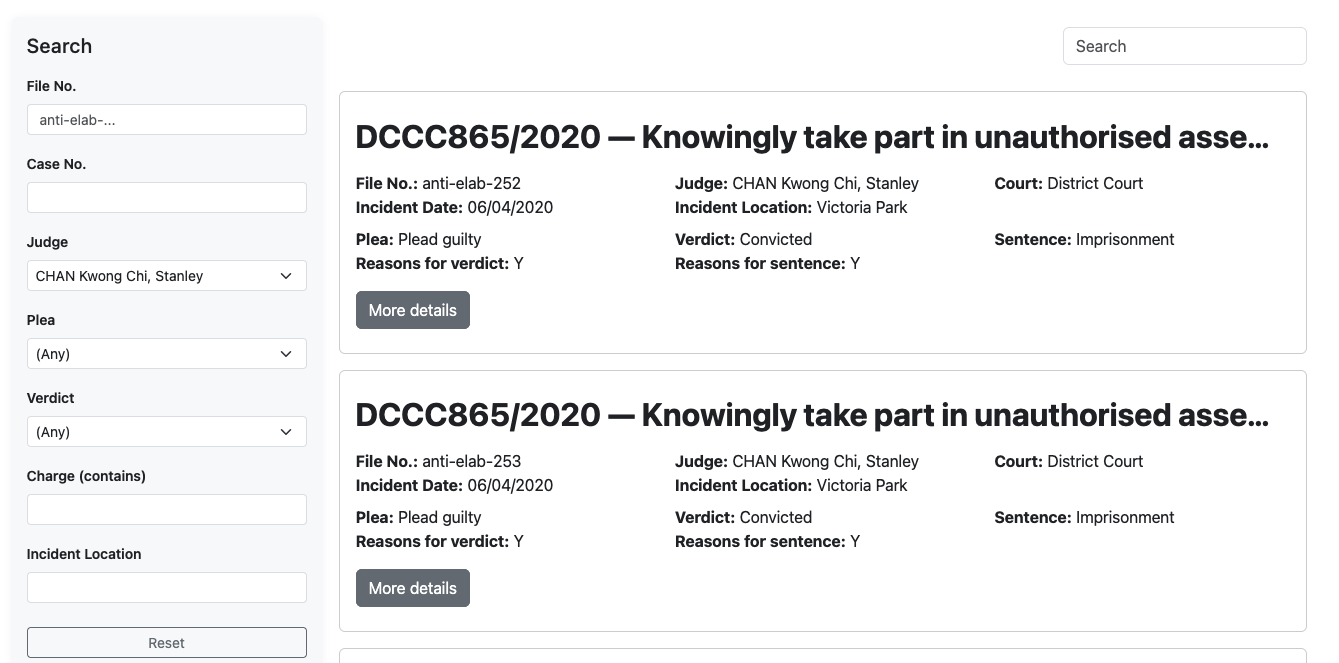
    The Digital Archiving Project has recently upgraded the database’s search engine. Users can now search not only by case number, but also by judge, plea, verdict, charge, location and sentence. These enhancements allow for more precise filtering of results, facilitating in-depth research and comparative analysis.

    For example, users may search for cases presided over by a particular judge by selecting the relevant name from the “Judge” dropdown menu. The database will then display all cases within its records assigned to that judge, enabling users to review and analyse patterns across judgments.

    Each record contains structured information relating to a specific court case, including the case reference number, court level, charges, plea, verdict and sentencing outcome. In addition to these core details, each page provides a concise summary of the court’s reasoning and, where available, links to the full written judgment and sentencing remarks. To ensure long-term accessibility, relevant documents are also uploaded to blockchain storage for permanent preservation.

    The content is organised in a standardised format to maintain consistency across records, enabling users to compare cases systematically and track legal developments over time.

    Click here to access the database. (To protect your identity and personal information, you are advised to use this website with an encrypted device and VPN.)

    Useful Resources

    Judicial Records in Hong Kong * has made every effort to collect court decisions related to the Anti-Extradition Bill Movement for educational and research purposes. These records are still accessible on the website of Hong Kong’s judiciary, but their continued availability to the public in the future remains uncertain. All judicial records collected and displayed here are secured and maintained using blockchain technology, through which they are decentralized and immutable, ensuring transparency, tamper-resistance, and trust in the integrity of the data. Our goal is to utilize blockchain as a form of censorship resistance to preserve invaluable public records. If there are any omissions in this database, please feel free to notify RIL’s research team: info.dap@protonmail.com .

    China Open Courts * aims to preserve and provide public access to judicial records from the People’s Republic of China that are at risk of disappearing from official sources. Below is an overview of the methodology adopted in this project, including our data collection strategies, scope of coverage, and plans for ensuring continued accuracy and relevance of the information. Interested parties are welcome to reach out to our team at chinaopencourts@protonmail.com for further information, collaboration opportunities, or suggestions on additional keywords and topics to include.

    *To protect your identity and personal information, you are advised to use these online resources with an encrypted device and VPN.

    An Unbreakable Wall? Challenges and Opportunities of Defending Freedom of Information in China is RIL’s first research report on information environment in China. This report provides a comprehensive account of China’s information environment under the rule of the CCP. Drawing on evidence-based insights from multiple perspectives, the report seeks to inform a broad range of stakeholders—from policymakers and international businesses to civil society organisations and academic institutions—and encourages collaborative efforts to address the challenges posed by China’s information landscape and its impact on global information networks. The full report is now available on our website.

    Safeguarding Freedom of Information in Hong Kong: Challenges, Opportunities and Remedies is RIL’s second research report, focuding on information freedom in Hong Kong. The report systematically outlines how Hong Kong’s information access environment has been significantly constrained since the implementation of the Hong Kong National Security Law (HKNSL) in 2020 and the Safeguarding National Security Ordinance (SNSO) in 2024. These measures have severely curtailed press freedom and undermined the ability of civil society to hold the government accountable. They have encouraged the withholding of publicly available data and represent a departure from international human rights standards. Access to and dissemination of information is increasingly criminalised, resulting in diminished government transparency, suppression of the media, and reduced accessibility to data for businesses. The repercussions are being felt by journalists, the business sector, researchers, and international organisations alike. The report is published bilingually on our website.

    Who we are?

    Resilience Innovation Lab (RIL) was founded by Asian veteran researchers and human rights defenders in 2023. RIL is a virtual platform promoting innovation, experimentation, and the exchange of research and educational initiatives that aim to develop and strengthen the democratic and digital resilience of organisations and individuals working in repressive environments.

    RIL envisions a synergy of democracy, technology and civil society resilience today, especially when authoritarianism emerges as a common threat to liberal democracies and open societies. Building the capacities of citizens and civil groups to respond to such a new environment with creative and innovative instruments is of paramount importance for their sustainable development.

    Our work focuses on researching Web3 technology, digital preservation of collective memory and history in conflict and post-conflict areas, and resilience of rule of law institutions and cultures in non-democratic regimes.

    Enquiry: info.ril@proton.me

  • RIL Newsletter #2026-01

    RIL Newsletter #2026-01

    Welcome to Resilience Innovation Lab (RIL). As we welcome the new year, we wish you all the best in 2026. We look ahead with hope and determination, ready to keep moving forward together.

    In this newsletter, we will share updates on two manuals on community-led archiving and social movement oral history projects published by experts from the Hong Kong diaspora community.

    Preserving Memory, Strengthening Community:

    New Resources for Community Archiving and Oral History

    We are pleased to introduce two newly published manuals developed by members of the Hong Kong diaspora, offering practical guidance on preserving community memory in challenging times.

    Rescuing Histories: A Guide to Community Archival Practices provides step-by-step advice for the diaspora, grassroots groups and volunteers on how to organise, preserve, and care for both digital and physical records. Grounded in the principles of community archiving and archival activism, the manual emphasises ethical, trauma-informed, and resource-conscious approaches to safeguarding collective histories.

    Complementing this, 守護記憶:民間口述歷史指南 (Safeguarding Memory: A Guide to Community Oral History), published by Hong Kong Social Movement Oral History Project, focuses on oral history as a powerful tool for documenting lived experiences often missing from official records. Written as an accessible introduction, it walks readers through planning, conducting, recording, and preserving oral history interviews, while carefully addressing legal, ethical, and safety considerations relevant to Hong Kong-related social movement histories.

    Together, these two manuals serve as practical resources for communities seeking to preserve memories, strengthen resilience, and ensure that diverse voices and experiences are not lost to time.

    Click here to read Rescuing Histories: A Guide to Community Archival Practice

    Click here to read Safeguarding Memory: A Guide to Community Oral History (Chinese only)

    Useful Resources

    Judicial Records in Hong Kong * has made every effort to collect court decisions related to the Anti-Extradition Bill Movement for educational and research purposes. These records are still accessible on the website of Hong Kong’s judiciary, but their continued availability to the public in the future remains uncertain. All judicial records collected and displayed here are secured and maintained using blockchain technology, through which they are decentralized and immutable, ensuring transparency, tamper-resistance, and trust in the integrity of the data. Our goal is to utilize blockchain as a form of censorship resistance to preserve invaluable public records. If there are any omissions in this database, please feel free to notify RIL’s research team: info.dap@protonmail.com .

    China Open Courts * aims to preserve and provide public access to judicial records from the People’s Republic of China that are at risk of disappearing from official sources. Below is an overview of the methodology adopted in this project, including our data collection strategies, scope of coverage, and plans for ensuring continued accuracy and relevance of the information. Interested parties are welcome to reach out to our team at chinaopencourts@protonmail.com for further information, collaboration opportunities, or suggestions on additional keywords and topics to include.

    *To protect your identity and personal information, you are advised to use these online resources with an encrypted device and VPN.

    An Unbreakable Wall? Challenges and Opportunities of Defending Freedom of Information in China is RIL’s first research report on information environment in China. This report provides a comprehensive account of China’s information environment under the rule of the CCP. Drawing on evidence-based insights from multiple perspectives, the report seeks to inform a broad range of stakeholders—from policymakers and international businesses to civil society organisations and academic institutions—and encourages collaborative efforts to address the challenges posed by China’s information landscape and its impact on global information networks. The full report is now available on our website.

    Safeguarding Freedom of Information in Hong Kong: Challenges, Opportunities and Remedies is RIL’s second research report, focuding on information freedom in Hong Kong. The report systematically outlines how Hong Kong’s information access environment has been significantly constrained since the implementation of the Hong Kong National Security Law (HKNSL) in 2020 and the Safeguarding National Security Ordinance (SNSO) in 2024. These measures have severely curtailed press freedom and undermined the ability of civil society to hold the government accountable. They have encouraged the withholding of publicly available data and represent a departure from international human rights standards. Access to and dissemination of information is increasingly criminalised, resulting in diminished government transparency, suppression of the media, and reduced accessibility to data for businesses. The repercussions are being felt by journalists, the business sector, researchers, and international organisations alike. The report is published bilingually on our website.

    Who we are?

    Resilience Innovation Lab (RIL) was founded by Asian veteran researchers and human rights defenders in 2023. RIL is a virtual platform promoting innovation, experimentation, and the exchange of research and educational initiatives that aim to develop and strengthen the democratic and digital resilience of organisations and individuals working in repressive environments.

    RIL envisions a synergy of democracy, technology and civil society resilience today, especially when authoritarianism emerges as a common threat to liberal democracies and open societies. Building the capacities of citizens and civil groups to respond to such a new environment with creative and innovative instruments is of paramount importance for their sustainable development.

    Our work focuses on researching Web3 technology, digital preservation of collective memory and history in conflict and post-conflict areas, and resilience of rule of law institutions and cultures in non-democratic regimes.

    Enquiry: info.ril@proton.me